


NRM has released data from thousands of soil samples, which suggests that land management has a significant impact on soil organic matter (SOM) levels. Overall, the less soil disturbance and less intensive farming practices tend to improve SOM levels over time.
NRM has been collecting soil analysis data since 1995. For the first time, the company has published consolidated, anonymised data on SOM gathered from over 11,000 samples analysed from June 2023 to May 2024. This data will help farmers design and implement insightful management plans to help improve soil health and optimise crop production whilst transitioning towards more sustainable agricultural practices.
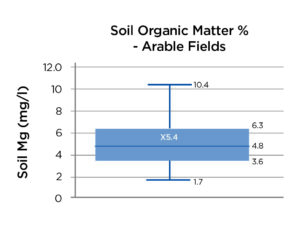
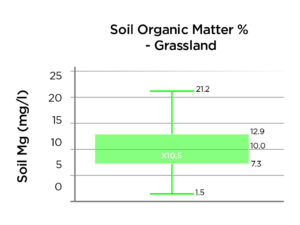
‘An interesting finding from our SOM data was that, while the interquartile range for arable soils lies between 3.6% and 6.3%, showing relatively moderate SOM levels, grassland soils exhibit a significantly higher range of 7.3% to 12.9%,’ said Sajjad Awan, Agronomy Manager at NRM. ‘This really emphasises the impact of land use on SOM content—adding organic inputs or disturbing your soil less can boost SOM levels, giving you a step up in terms of soil health. The broader SOM range we found in grasslands is likely due to system factors such as cutting frequency, grazing intensity, and plant diversity. In contrast, the narrower SOM range found in arable soils suggests that, even though levels tend to be more uniform, intensive farming practices tend to reduce SOM over time.’
Very few farmers test for SOM
‘Whilst around 90% of arable farmers regularly book our standard soil tests, only around 17% test for organic matter. This gap is significant, as SOM influences everything from fertility and water retention to soil aeration, root penetration and bulk density. By understanding and managing SOM levels alongside nutrient analysis, growers and advisors can make more insightful management decisions. Better decision-making leads to improved soil health and compliance with sustainability objectives, both of which help to bolster the resilience of farming businesses.’
NRM’s SOM analysis can be easily added to its standard soil package. Our standard soil package provides soil indices based on RB209 guidance and an analysis of crop-available phosphorus, potassium, magnesium, and soil pH.
Up-to-date SOM analysis is vital to meet the requirements of the Sustainable Farming Incentive (SFI)’s SAM1 action for soils. Not all standard soil testing includes SOM analysis, so growers may not qualify even if they have soil nutrient analysis results from the last 5 years.
‘There are plenty of advantages to SOM analysis,’ continued Sajjad. ‘Benchmarking SOM levels will enable you to assess the effect of any management changes and help you not only improve soil health and learn how to withstand extreme or unexpected weather conditions, but it’ll also help you meet sustainability targets. So, adding SOM to your regular standard soil testing is vital if we are to improve sustainable productivity and protect the natural environment agriculture relies on —something the whole industry should be striving toward.’
Read our soil summary here for more information and insights.
With Christmas only a few weeks away, we would like to take this opportunity to thank all our customers for their business during 2024, and to let you know our operating plans for the holiday period.
Our laboratory and courier arrangements for Christmas and New Year are listed below. Please note that, while many of our business units close for a short period over the holidays, we also have specific cut off dates for the receipt of some sample types. Please check the details for each business unit.
For any enquiries, or to book in your samples, please speak to your usual Cawood contact.
NRM
Closed from Tuesday 24th December at 12:30pm and reopening on Thursday 2nd January. For full details of our laboratory and courier arrangements over the holiday period, click here.
Sciantec
Closed from Tuesday 24th December at 12:30pm and reopening on Friday 27th December. For full details of our laboratory and courier arrangements over the holiday period, click here.
Sci-Tech (IRE)
Closed from Tuesday 24th December at 12:30pm and reopening at 8:30am on Thursday 2nd January. For full details of our laboratory arrangements over the holiday period, click here.
IAS
Closed from Tuesday 24th December at 12:30pm and reopening on Thursday 2nd January. Full details of our laboratory and courier arrangements over the holiday period, click here.
Marchwood (Manchester)
Closed from Tuesday 24th December at 12:30pm and reopening on Thursday 2nd January. For full details of our laboratory and courier arrangements over the holiday period, click here.
Marchwood (Southampton)
Closed from Tuesday 24th December at 12:30pm and reopening on Thursday 2nd January. For full details of our laboratory and courier arrangements over the holiday period, click here.
Enitial
All services running as usual.
Chemtech
Closed from Tuesday 24th December and reopening on Tuesday 2nd January. For full details of our laboratory and courier arrangements over the holiday period, click here.
It is with profound sadness that we acknowledge the sudden and untimely death of our dear friend and former colleague, David O’Connell. As we come to terms with this loss, we reflect on David’s life and his remarkable journey with IAS Laboratories and Cawood, as well as the mark he left on the agricultural and environmental sectors in Ireland.
David joined IAS Laboratories in the early 1990s as an agricultural graduate. With his characteristic drive and passion, he quickly worked his way up to a consultant, eventually becoming an integral member of the technical sales team under the leadership of then Managing Director, John Britton. His dedication to agricultural science, particularly in the areas of soil, forage, milk, and blood analysis, was instrumental in diagnosing and addressing fertility and production issues on dairy farms and within the equine industry in Ireland.
David’s reputation for expertise and innovation within agriculture grew quickly. In 1998, he founded his own consultancy business, OCAE Consultants. From his offices in Ballinderry House, Enfield, Co. Meath, David managed this successful business while running a 200-acre mixed tillage farm and pursuing his passion for breeding National Hunt horses. Despite his entrepreneurial success, David remained closely connected to IAS Laboratories, contributing as a trusted advisor and loyal customer.
‘Whenever David visited the lab to drop off samples, he would always stick around to chat about new technology and analytical techniques,’ said Mick Hogan, Technical Sales Manager at IAS and long-time colleague of David. ‘He always showed a keen interest in how the lab operated. Of course, this would become very handy for us at IAS in the future!’
In 2010, David seized the opportunity to return to IAS. The business had grown significantly and been put up for sale, and the team wanted it to be bought by someone who would continue to run it in the local area and with similar values. Along with his business partner, Mark McGarry, David acquired the laboratory and relocated it to Royal Oak Business Park, Bagenalstown, Co. Carlow.
Under his leadership, IAS flourished. His vision for the company was clear: to be at the forefront of agricultural and environmental laboratory analysis. He meticulously believed in the benefit of sustainable agriculture, and he thrived on providing consultancy to clients off the back of results he confidently stood over. Through David’s meticulous dedication, IAS expanded its team, modernised its facilities, and adopted cutting-edge technologies, ensuring the lab became a leader in scientific analysis in Ireland.
David played a pivotal role in the agricultural community, exemplified by his management of the Irish Department of Agriculture, Food, and Marine’s (DAFM) soil sampling contract whilst at IAS. The programme, which is the largest of its kind in Ireland and globally unique, was a monumental success under David’s guidance. His expertise in logistics, sample processing, and analysis was essential in bringing this project to fruition.
In 2021, David made the decision to sell IAS Laboratories to Cawood, allowing him to focus on OCAE Consultants and spend more time with his family. However, his commitment to IAS continued, as he stayed on as General Manager until March 2023, ensuring a smooth transition and furthering the company’s success.
‘David’s passing has left a void felt by everyone who had the privilege of knowing and working with him,’ continued Mick. ‘He was not only a visionary leader, but also a true gentleman to all who knew and worked with him on his journey. I am proud to have called him a dear friend.’
We extend our deepest condolences to his family, friends, and colleagues. David O’Connell’s legacy will continue to inspire those of us who had the honour of working alongside him, and his contributions to the field of agricultural science in Ireland will have a lasting impact for years to come.

NRM has partnered with NFU Energy as part of the NFU’s new decarbonisation initiative for farmers. A key part of this scheme includes soil carbon analysis, which is being conducted by NRM as the UK’s largest provider of agronomic analysis.
‘We are supporting the NFU in its mission to help secure a sustainable future for farming businesses throughout the UK,’ said Sophie Cath, Senior Business Development Manager at NRM. ‘We are providing the reliable soil carbon analysis needed to help growers evaluate soil health for year-on-year improvement. Our analysis also helps farmers benchmark their soil organic matter and carbon levels, giving them a firm foundation for increasing carbon sequestration and reducing emissions.
‘The scheme is fully funded, so it’s designed to be as straightforward and stress-free as possible. This makes it easy for busy farmers to benefit and transition as seamlessly as possible to sustainable farming practices. By participating, farmers can optimise their crop production sustainably, without compromising on profits.’
As part of the pilot, 30 farms in North Yorkshire are receiving customised assessments designed to help improve farming practices and reduce emissions. In addition to soil carbon analysis, the initiative includes energy audits to help farmers cut consumption and costs, renewable energy feasibility studies, and biodiversity assessments to protect and enhance local habitats.
‘We are proud to be part of this groundbreaking initiative,’ continued Sophie. ‘Agriculture is in such a unique position to not only protect but also actively work with the environment by adopting regenerative farming practices. Partnering with the NFU once again—which we do every year to give members 10% off soil carbon analysis—reflects our commitment to increase awareness of and help farmers achieve regenerative agricultural practices to fight against climate change.’
Farmers from North Yorkshire must register their interest by Friday 25th October 2024 to secure a spot. To express interest or learn more, contact NFU Energy by emailing sales@nfuenergy.co.uk or calling 024 7669 6512.
For more information on our services, contact us.

A team of NRM experts visited Sapperton Wilder Farm to learn more about its groundbreaking regenerative agriculture project, deepen collaboration, and facilitate knowledge exchange. The visit was greatly appreciated by the organisations, who both support regenerative farming practices and restoring land health for sustainable food production. The goal was not only to better understand the farm’s innovative approaches, but also to strengthen relationships within the industry and educate NRM’s internal lab staff about the critical importance of regenerative agriculture.
‘By connecting our lab-based team members with real-world farming projects like this, we can enhance their understanding of why their work matters,’ said Sophie Cath, Senior Business Development Manager at NRM. ‘The team at Sapperton Wilder were keen to meet the people behind our analysis, understand the lab processes, and ensure that our technicians, analysts and chemists are familiar with the practical applications of their tests. This engagement is essential in fostering a sense of ownership and responsibility among our team members, helping them to see where their work fits into the bigger picture.’
Located in the Cotswolds, Sapperton Wilder Farm is engaged in an ambitious land restoration project covering 400 acres of marginal farmland. The team aims to reinvigorate the local ecosystem by enhancing biodiversity, improving soil health, and integrating regenerative agricultural techniques. Founded by Dr Jonathan Milner, a Cambridge biotech entrepreneur inspired by his work with Sir David Attenborough, the project’s long-term goal is to monitor ecological and socioeconomic returns over the next 30 years.
To help achieve this, Sapperton Wilder has employed NRM to conduct various soil analyses. These services are helping the farm benchmark soil health and monitor progress for year-on-year improvement. Sapperton Wilder is preparing for another round of sampling this autumn, ensuring that NRM remains at the forefront of this long-term project.
‘It’s been very interesting to see how Sapperton Wilder Farm’s results have changed, highlighting the true power of regenerative practices,’ said Sajjad Awan, Soil & Crop Nutrition Agronomist at NRM. ‘Over the past two years, the farm observed a 40% increase in CO2 respiration across several blocks of land. This is a strong indicator of heightened microbial activity, essential for nutrient cycling and plant productivity.
‘Additionally, organic and active carbon levels, which are beneficial for soil microbes and therefore increased biological activity, were measured at average levels for arable fields. This is an improvement from a few years ago, as the farm has left fields fallow for two years to help foster healthier soil and improved crop yields. Regenerative practices are expected to increase these levels over time.’
NRM’s team members based in the lab saw this trip as an exciting opportunity to see the direct impact of their work and facilitate knowledge exchange. By understanding the importance of precision in analysis, team members can ensure that the results they deliver directly impact farming practices and environmental restoration.
‘I found it very interesting to see the other side of what we do in the lab every day,’ said Will Alexander, General Analytical Team Leader at NRM. ‘It helped me and my colleagues get a deeper understanding of the physical scale and the overall timeline of the Farm’s operation. The team at Sapperton Wilder is clearly very knowledgeable and passionate about their work, and it was great to put a face to the sample. It’s all too easy to forget that our results affect peoples’ lives and how important it is to respect that. It would definitely be beneficial to return in a year or two to see the progress they have made.’
‘We are proud to be part of this monumental sustainability project,’ continued Sophie. ‘As regenerative agriculture becomes increasingly crucial in the fight against climate change and environmental degradation, knowledge exchange and partnerships like these are important to lead the way in adopting and encouraging sustainable farming practices within the industry.’
For more information on our services, contact us.

Sultan Khan joined NRM as its new Business Development Manager on Monday 12th August 2024 to strengthen its environmental commercial team. He will be responsible for growing the business’ commercial expertise in environmental testing for the land-based industries, helping the team identify new opportunities, develop new services, and form and nurture relationships with customers.
‘The environmental side of the business has seen substantial growth in recent years,’ said Sophie Cath, Senior Business Development Manager at NRM. ‘This boom in requests for environmental testing has been driven by factors such as government targets to decarbonise the heat network in the UK, increasing legislation, and pressure from the agricultural industry to adopt and maintain sustainable farming practices. Sultan’s appointment will help bolster our relationships with customers, promoting the benefits of environmental testing and adding revenue to balance out other more seasonal services.’
Sultan has a BSc in Chemistry from Bradford University and a wealth of experience in business development across a variety of industries, including Eurofins UK Consumer Product Testing Services Ltd. Sultan’s chemistry background and passion for the technical side of environmental testing will provide customers with the technical and proactive support required to help them make informed decisions and meet their goals.
‘I am really looking forward to getting stuck in at NRM and sinking my teeth into a scientific commercial role,’ said Sultan. ‘Anaerobic digestion (AD) analysis is a big part of the environmental testing NRM provides, and as it’s such a technical service, taking the reins on improving the service and promoting its benefits to customers ticked every box for me. I am excited about being part of the team and helping farmers and other players in the land-based industries support sustainable practices, maximise revenue, and adhere to legislation.’
NRM recently held two drop-in sessions for colleagues on our innovative grain analysis service, GrainCheck, to consolidate expertise, improve customer service, and increase collaboration.
‘At Cawood, we are committed to improving customer service, and strengthening our expertise and the analytical advice we give to our clients to help them meet their goals,’ said Sophie Cath, Senior Business Development Manager at NRM. ‘Part of this means ensuring colleagues feel engaged with the work that they do and develop a deep awareness and understanding of the whole process. We have technicians and analysts that only get involved in some of the analytical processes, so by holding informative drop-in sessions on GrainCheck, we can consolidate expertise whilst connecting colleagues from various departments with all aspects of the service.’
The launch of our 3 new GrainCheck videos, featuring our experts Sophie Cath, Alli Arden (Agronomy Manager), Sajjad Awan (Soil & Nutrition Agronomist) and Lloyd Kadhani (Section Head – General Analytical), provided a fantastic opportunity to increase knowledge and understanding of grain analysis from the customer’s perspective.
‘Our goal with these videos is to help communicate the benefits of grain analysis and how customers can use their results more effectively,’ continued Sophie. ‘We want farmers to see the tangible benefits of using GrainCheck and how it can impact their bottom line, as well as how we can help them optimise crop nutrition and further streamline their practices next season.’
The sessions, held on Tuesday 30th and Wednesday 31st July, aimed to increase awareness of the whole process internally so that our colleagues can see the part they play in the bigger picture. Colleagues were taken on a brief tour of the relevant lab areas so that they could see what happens to the samples they prepare or where the extracts they receive come from, offering a firsthand look at the journey of grain samples from preparation to analysis.
Discussion points for the drop-in sessions included:
- Utilising GrainCheck results effectively
- The integration of GrainCheck with other seasonal testing services
- A case study highlighting the benefits of GrainCheck for a farmer’s business
- A detailed explanation of how testing is performed at the lab.
Over 30 colleagues from our Customer Services, Sample Receipt, Sample Prep and Analytical departments attended over the two days. Questions were raised around the significance of certain nutrients, the potential implications if certain nutrients are low or high, and what happens once the grain is harvested. Broader industry challenges, such as rising input costs and environmental impacts, were also explored.
‘Overall, our colleagues found the drop-in sessions informative and helpful,’ said Sarah Pitcher, Service Support Manager at NRM. ‘Many said they valued the chance to meet Sophie and Alli to learn more about the industry from the customer’s perspective. Those in Customer Services also said that they now feel even more confident taking queries and talking to customers about GrainCheck.’
Encouraged by the success of these sessions, NRM plans to conduct more such events throughout the year. ‘We aim to hold these sessions in line with the agricultural calendar,’ said Sophie. ‘This ensures our colleagues remain well-informed about our services and can provide the best support to our customers.’
GrainCheck is NRM’s innovative grain package for cereals. If farmers send in their grain samples at harvest for nutrient analysis, they can assess nutrient capture and offtake, allowing management plans to be refined for the following season. We also have a nutrient offtake calculator so that growers can compare results to the typical average and see if nutrient levels are smaller or larger than expected.
Watch our brand new GrainCheck videos and contact us to order your sample kit today.
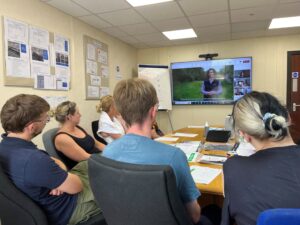
Alli Arden, Agronomy Manager at agricultural analysis laboratory NRM, recommends booking grain analysis at harvest to help combat the unpredictable weather conditions we are seeing more often in the UK.
‘We had record rainfall in autumn and winter, resulting in a very wet start to the season,’ she says. ‘Not only was rainfall in October 122% of the 30 year average, but we had four named storms from late September to early November, resulting in major flooding across the UK. This drastically affected autumn-sown drilling and crop establishment, and fewer were drilled overall. Growers who decided to redrill in the spring due to this poor establishment are likely to see lower yields this year—but we aren’t sure of the crop’s nutritional value until we check with analysis.’
With this in mind, Alli is encouraging farmers to take a proactive approach and assess crop nutrient capture and offtake through NRM’s grain analysis service, GrainCheck.
‘The results gathered through GrainCheck analysis will allow growers to check how well their crops did this season, assess what went well and what didn’t, and refine management plans for the following season,’ she says. ‘Overall, rainfall, temperatures, and general conditions have become unpredictable over the last few years, making it harder for growers to manage their enterprises effectively. To be as ready as possible for next season and combat unpredictable weather, we need to start planning now with grain and soil analysis.’
NRM’s GrainCheck is an innovative grain analysis package for cereals for assessing crop nutrient capture and offtake, helping you adjust nutrient plans for the following season. It includes a range of nutrients, including nitrogen, phosphorus, potassium, magnesium, N:S ratio and micronutrients, and GrainCheck Plus also includes molybdenum analysis. Results should be interpreted alongside soil and tissue test results to give a full understanding of the effectiveness of crop nutrition programmes.
Alli asserts that mitigation strategies are most effective when combining analysis services with expert advice. Not only has NRM developed an online calculator where farmers can convert their results into nutrient offtake in kg per hectare, but GrainCheck comes with recommendations based on the RB209 recommendation for routine grain analysis.
‘Once you’ve got your results and input them into our calculator, it can be difficult to know how to relate this to seasonal, unpredictable weather conditions,’ Alli says. ‘For example, heavy rainfall like we’ve seen this year can leach essential nutrients from the soil, reducing availability for crops and increasing the risk of pollution. In situations where soils are free draining, improving soil water holding capacity is crucial for sustained growth and optimal productivity. It’s also important to note that the effectiveness of mitigation strategies will likely vary depending on factors like physical aspects, including soil type, the farm enterprise, and attitude and mindset.
‘Reviewing how well crops have utilised nutrients during the previous season will help figure out how well certain strategies worked and how best to farm, guiding your decision-making. But don’t just take my word for it—Rob Briscoe, of Lower House Farm in Cheshire, uses GrainCheck as part of a well-rounded, season-long analysis plan every year to decide if he needs to adjust his management for the following season. This has led to more insightful decision-making for improved nutrient use efficiency, increased profitability, enhanced climate resilience, and ultimately sustainable farm productivity.’
‘Optimising crop production and improving profitability is very important to our customers. By giving growers expert advice through our agronomists, Sajjad Awan and Alli, we are helping our customers understand the context of their results so they can make better decisions,’ said Sean Stevenson, Commercial Director of Cawood Agriculture. ‘This, coupled with our innovative suites of tests, helps to cement our position as the UK’s leading agronomy analysis laboratory.’
Learn more about GrainCheck and contact us today to order your sample kit ready for harvest.

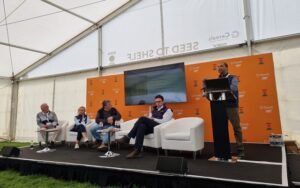
Dr Sajjad Awan, Soil and Crop Nutrition Agronomist at NRM, advised farmers and other attendees of this year’s Cereals event that soil and crop analysis is key to optimising crop nutrition. He discussed the key drivers of soil health and crop performance and how measuring, managing, and monitoring with laboratory analysis throughout the year helps inform growers’ nutrition plans.
‘There are many drivers of soil health, nutrient availability, and crop performance,’ said Dr Awan. ‘One of the most important is soil pH, which affects soil biology through soil respiration. The problem is that only a fifth of the samples that we analysed from arable fields in the 2022 to 2023 season were in the target soil pH range. This is an issue as pH is the key driver of nutrient availability and crop performance: if your soils aren’t within optimal range, then your crop yields will drop off. This is why it’s so important to benchmark where your soils are at so you can take corrective action before productivity suffers.’
Dr Awan spoke on the “From Seed to Shelf” mainstage alongside other agricultural experts at Cereals on Tuesday 11th and Wednesday 12th June.
‘Undertaking soil analysis to determine pH levels is just one step growers must take throughout the year to truly maximise their crop production,’ continued Dr Awan. ‘In an ideal world, growers would also measure soil mineral nitrogen levels and then undertake plant tissue analysis to assess the update of nutrients by the crop during the season. Then, when harvest comes around—which will be very soon—it’s the perfect time to think about employing grain analysis as a postmortem of your nutrient management plan.
‘By determining the nutrient status of your grain, you can finetune your following crop’s nitrogen requirement and next season’s fertiliser inputs. This comprehensive view of nutrient use efficiency isn’t just good for your profit margins, but for the environment, too. Ultimately, understanding your data will help you boost productivity, support sustainable food production, and safeguard our world to help benefit everyone in the long term.’
NRM analyses over 600,000 soil samples across all farm types every year. This allows us to gather a large amount of data for representative results, enabling us to draw meaningful comparisons for the benefit of our customers and the UK agricultural industry as a whole. Our various analysis services, including CarbonCheck for soil carbon analysis, CropCheck for plant tissue testing, GrainCheck for grain analysis, and N-Check for soil nitrogen analysis, help customers check they are on course throughout the season. These tools help farmers increase performance and profitability whilst committing to sustainable, resilient practices to help them stay productive.
For more information on our analysis services, contact us.
In the first 3 months of this year, we have had half a year’s worth of rain. This has continued throughout April, meaning that farmers are faced with tough decisions regarding their winter-sown crops. Waterlogged fields, nutrient loss, and diminished soil nutrient concentrations has prompted growers to assess the viability of their crops. NRM’s CropCheck plant tissue analysis services can help growers make these tough decisions.
‘Current conditions have forced farmers to reevaluate what do to with their winter-sown crops,’ said Alli Arden, Agronomy Manager at NRM. ‘With soil nutrient concentrations likely diminished, crops with poor root systems will struggle to access nutrients beyond their immediate rooting zone, either because levels are less concentrated or because nutrients have moved down the soil profile. Effective measurement is essential to evaluate their future viability.’
The persistent rainfall has taken a toll on crop growth, especially in fields with heavier soil texture or compaction issues, exacerbating waterlogging problems. Even if establishment last autumn appeared satisfactory, the weather has caused nutrient loss through leaching, particularly nitrogen and sulphur. Additionally, overland runoff has carried soil loaded with phosphate into roads and watercourses in many areas, while gaseous nitrogen loss through denitrification further depletes soil nutrients. So, crops may not have taken up as many nutrients as expected.
This is where analysis tools like CropCheck come into play. NRM’s innovative plant tissue analysis service drives efficiency by helping farmers and their advisors assess the growth of the plant as it develops. Measuring the nutrients the plant contains at key growth stages gives an indication of nutrient adequacy in time to act if required. Interpretation is also provided to guide why nutrients might be high or low. This service is for a broad range of cereal crops, with growth stages ranging from GS30 to GS37.
‘We are currently seeing crops at GS30 and beyond, so now’s the time to book CropCheck,’ continues Alli. ‘By accurately assessing the current nutrient status of crops with CropCheck, farmers can make informed decisions about fertilisation strategies. Ultimately, understanding the crop’s nutrient requirements allows for better management of costs while ensuring sufficient nutrient uptake for optimal yield potential, especially when weather conditions are unexpected or extreme.’
‘The expertise of our agronomists, Sajjad Awan and Alli, means that our customers can tap into the invaluable agronomic experience we have at NRM to help them make better decisions,’ said Sophie Cath, Senior Business Development Manager at NRM. ‘We know it’s important to our customers that they understand the context of their results to help them reach their goals and optimise their crop nutrition plans, so this expertise is invaluable. Coupled with our innovative suites of tests, this all helps to cement our position as the UK’s leading agronomy analysis laboratory.’
NRM’s innovative CropCheck services help farmers check crops are on track as they develop. This allows growers to adjust management programmes to correct any issues or reduce applications and save money. Learn more and contact us today.