Providing farmers and their advisors with data and insight to facilitate decision making.
Access to accurate, reliable data is essential to help farmers and their advisors enhance performance, improve productivity and evaluate progress. Agriculture can be unpredictable in many ways, so information that can predict outcomes and facilitate decision making is invaluable.
The use of laboratory analysis to manage soil health and plan crop nutrition programmes is becoming more widespread, with a broad range of soil, manure, tissue and grain testing now available. Livestock farmers and vets rely on regular testing to monitor animal health and stay compliant with food safety regulations, whilst feed manufacturers test raw materials and finished feeds to optimise animal nutrition.
As new initiatives are introduced the role of laboratory analysis will become even more important. A good example is the current interest in carbon sequestration and the potential of future farm income opportunities from soil carbon measurement, management and trading. With global population set to increase to 9.7 billion by 2050, agriculture will be under pressure to provide sufficient food in a sustainable way. Insights from laboratory analysis will help achieve this.



Cawood is the UK’s leading provider of agricultural laboratory testing, offering a comprehensive range of UKAS accredited analysis services for arable and livestock farmers through our divisions,
NRM, Sciantec, Sci-Tech, and IAS Laboratories.
• Soil nutrient status and carbon measurement
• Manures, plant tissue and grain nutrient analysis
• Forage, raw materials and animal feeds, including shelf-life testing
• Serology for veterinary diagnosis and animal health monitoring
• Milk and grass mineral analysis for dariy farmers
• Water testing for horticulture and livestock.
Cawood’s commitment to supporting agriculture has led to innovative new analyses. Following consultations with industry experts, customers, and government advisors, we have developed CarbonCheck for soil carbon analysis, N-Check for measuring soil mineral nitrogen, GrainCheck for understanding crop performance, and CropCheck, a plant tissue analysis package which provides nutrient values specific to crop growth stages. We also prepare specific tests for individual customer requirements.

Monitoring and improving soil health
Soil is the foundation of our world. A healthy soil will support crop production, preserve biodiversity and store water and carbon. With 95% of global food production relying on soil, and the increased focus on soil health due to pressure from population growth and climate change, benchmarking and maintaining it is key to a sustainable future.
Measuring the physical, chemical and biological properties of soil will identify any soil health issues, such as acidity, poor nutrient availability or reduced biological activity, allowing remediation plans to be put in place. Soil carbon analysis is also becoming more popular due to the rise of lucrative carbon trading markets, and pressures from the UK government and NFU to reach net zero greenhouse gas emissions across the whole of agriculture by 2040.

Planning crop nutrition programmes
A good understanding of the nutrients available to the crop from the soil is the starting point for crop nutrition planning. Soil analysis measures nutrient levels including phosphorus, nitrogen, potassium, magnesium, and trace elements. To maximise the availability of required nutrients, other parameters such as soil pH can be measured and corrected.
For growers applying farmyard manure or slurry as part of their crop nutrition programme, testing will identify nutrient levels being applied, enabling fertiliser application rates to be calculated accordingly. Tissue testing in the Spring will allow in-season adjustments, particularly for trace elements, and grain testing at harvest will measure the success of the strategy, enabling it to be finetuned for the following year.

Monitoring crop health and performance
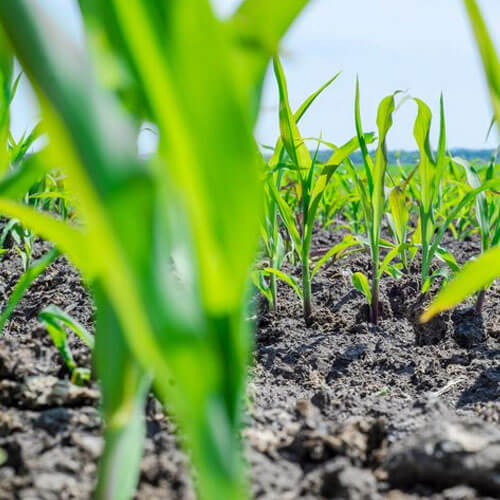
Alongside a tailored crop nutrition programme, it is important to monitor crop health, growth and performance during development to allow implementation of timely interventions if needed. Plant tissue analysis is key to understanding the nutrient and trace element content of your crops early in the growing season before deficiencies become yield and profit limiting.
Testing nutrient offtake with grain analysis will also help assess the crop’s suitability for specific markets by checking protein and zinc levels and provide evidence of seasonal issues such as poor rooting, compaction or poor establishment. This allows tweaks to crop nutrition plans for subsequent seasons.
Optimising animal nutrition
With feed one of the highest costs of animal husbandry, it is important to understand the dietary composition of all feedstuffs, including forage, so the need for supplementation can be assessed. Providing animals with balanced, sufficient diets, free of contaminants and toxins, helps to improve and maintain their productivity and welfare whilst keeping costs down.
Nutritional, microbiological and undesirables analysis of feeds and pre-mixes helps feed manufacturers to meet quality and compliance requirements. By analysing fresh grass, farmers can accurately tailor fertiliser programmes to replenish nutrients as they are taken up by the plant, resulting in the most nutritional forage available for both grazing and for feeding in the winter months as silage. Livestock nutrition plans can then be managed efficiently and reliably to improve animal welfare, maintenance needs, productivity, and profitability.
Monitoring animal health
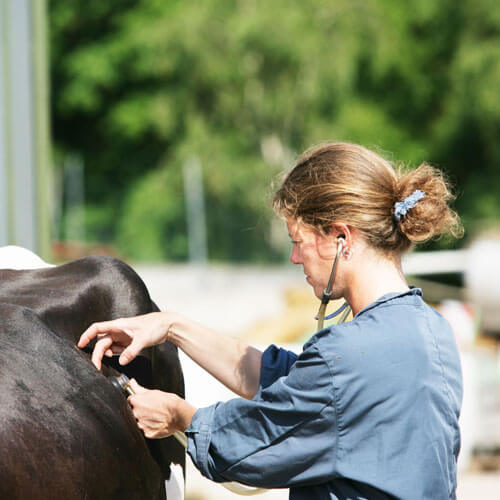
Following good farming practices and regular monitoring are the best ways to reduce the risk of disease amongst livestock. This is essential for animal health and productivity as well as for traceability and safety in the food supply chain.
With the increasing amount of legislation in this area, farmers must work with vets and legislative bodies to remain compliant by testing their animals and animal products for diseases. Regular health monitoring, as well as PCR and serological testing for diagnosing and screening for diseases such as PRRS, ensures vets and farmers can quickly identify and treat infection before it can impact the flock or herd.
Assessing water suitability
It is critical to understand the suitability of water for irrigation and drinking. In horticulture, the nutrient solutions used in NFT provide plants with the necessary elements to maximise crop production. Solutions must therefore be tested to ensure concentrations are below the level at which interference with water uptake occurs, whilst still maintaining sufficient nutrient levels for growth.
Poor drinking water quality affects livestock production and performance, including hampering growth and decreasing disease resistance. Mineral and potable water testing is used to determine livestock suitability, ensuring vets and farmers are in line with up-to-date legislation and regulations.