


Why should you analyse silage before winter? #2

IAS
Agriculture
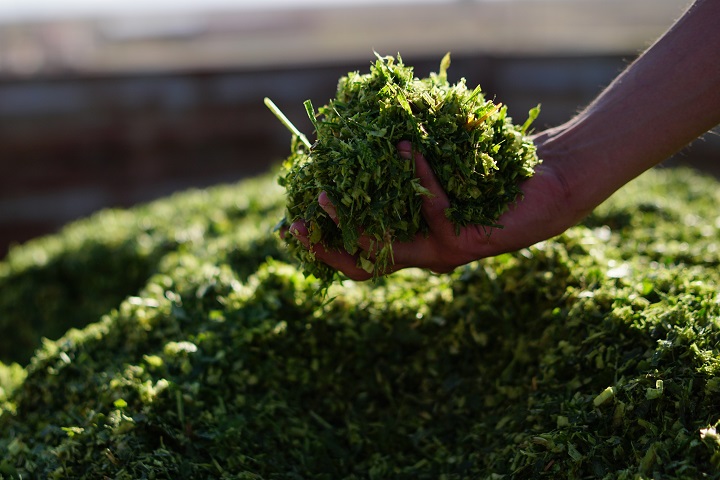
Did you know that the maize silage leaves the chopper’s spout at around 300 miles an hour? It’s also best to ensure your maize silage is from 30 to 40% dry matter, which is when the highest dry matter digestibility and quality occurs. Wetter silage has excessive runoff and seepage of nutrients, whilst that with over 40% dry matter doesn’t pack well, resulting in mould growth.
As you can see, analysis is important to ensure your animals are getting the very best nutrition possible for peak production—find out more in part 1 of my blog on analysing silage before winter. Read on for a guide to your silage results, and how IAS can help you optimise animal nutrition.
A guide to your silage results
What do your results mean?
Dry matter digestibility (DMD) is the content of digestible organic matter in the dry matter. This decreases progressively as the forage matures and becomes more “stemmy.” DMD is a good guide to overall nutritional value.
The target range of DMD is 55-75% depending on the type of stock.
Dry matter (DM) is the amount of silage material that remains after water has been removed.
Generally, the higher the dry matter level, the higher the potential intake of silage. Low dry matter silages tend to be extensively fermented, while high dry matter silages are more susceptible to spoilage (bacterial and fungal).
The expected target range of DM is 25-35%.
Crude protein: if high, additional protein tends to be rapidly degradable and may be poorly utilised, especially if there is inadequate rumen available energy in the diet. High milk and blood urea levels have been associated with high protein silage. High blood urea levels can have a direct and indirect impact on fertility.
The target range for protein is 7-20% DM.
pH is a measure of the acidity or alkalinity of the silage. Where the pH of grass is above the target range, typically because of poor or secondary fermentation, undesirable VFAs may have been formed and production may be reduced. Feeding animals more acidic silages, on the other hand, may impair rumen performance, resulting in acidosis, lower intakes, and production.
The target range for pH is 3.5-5 depending on dry matter levels.
Metabolisable energy (ME) is the most important measure of the energy content of silage when fed to ruminants. It represents the amount of energy available to the animal after accounting for losses in digestion, gases, and urine.
The target range for ME is 8.0-12.0 mj/kg of dry matter.
High values of ammonia are indicative of butyric fermentation and may be associated with high blood and milk urea levels. High blood urea has been both directly and indirectly linked to infertility. Care should be taken in interpreting this term as it is a percentage of the total N, not a percentage of the dry matter.
The target range for ammonia is >15% of the total N.
Act now to use your silage results to make feeding decisions early.
The IAS silage test can help you establish the quality of each silage you have made this year. You can then decide which animals get which silage. If you are milking cows, they must always get your best silage post-calving. Until you test your silages, you don’t know which feed is your best, so it is essential to get your different harvests of silages tested.
IAS Laboratories also offers a full mineral analysis on silage. This can help inform on-farm decisions of mineral supplements for pre- and post-calving periods this winter.
Contact IAS on 059 9721022 or sales@iaslabs.ie for a quote.