


The end of “averages”? How growers can refine future management plans with grain nutrient analysis

NRM
Agriculture
Average figures are incredibly helpful in giving farmers and advisors a general idea that they are moving in the right direction in predicting crop requirements. However, when you drill down to individual farms and regions, it’s clear that our soils have far greater variability in terms of structure, nutrient availability, and utilisation—meaning we need to take a more case-by-case approach.
NRM’s five-year study of nearly 500,000 soil samples from the UK shows that there are five key areas where growers could make significant gains:
- Soil carbon
- Grain nutrient offtakes
- Nutrient utilisation in the face of unpredictable weather conditions
- Soil pH
- Organic manure utilisation, including taking magnesium into account.
Our focus for this blog is grain nutrient offtakes.
If you haven’t read our introductory blog to this series discussing the importance of laboratory analysis and adapting sustainable practices, click here.
Otherwise, read on to find out more about the importance of measuring grain offtakes, and how NRM’s GrainCheck analysis service can help you optimise crop production and refine your nutrient plans for the following season.
Measure grain nutrient offtakes
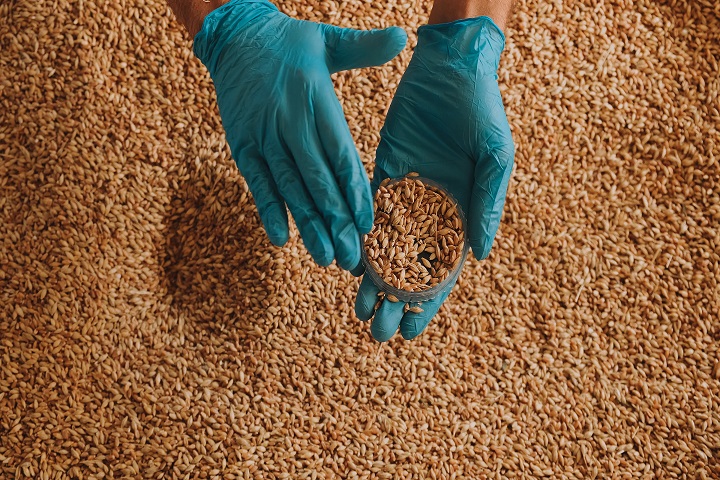
Grain nutrient analysis is an often-overlooked analysis step. Testing nutrient offtake values in grain post-harvest can give you a vital indication of fertiliser needs for the following season.
Our analysis shows that this varies considerably from year-to-year, and this extent of these changes is highly significant.
Grain N offtakes measured by our GrainCheck service in harvest 2023 were around 5% higher than in 2022, suggesting that more of the applied N has been taken up by the crop. This could be an early indication of less N being available in the soil in 2024.
Factors during the winter, such as soil temperature and rainfall, can affect overall soil N level subsequently, so it’s essential that this is tested at the start of the following year to give the most accurate picture.
At a time when N prices are still considerably high, understanding precisely how much N is in the soil—soil mineral nitrogen (SMN) and the total soil nitrogen supply (SNS)—can help save on fertiliser bills.
Our analysis also shows that P offtakes were considerably higher during 2023. These were 16% higher than in 2022, again suggesting that more has been removed by the crop than in previous years. So, measuring soil P is necessary to see if there are sufficient levels in the soil or whether they require topping up.
There’s no point adding more nutrients to crops than is necessary from both production and environmental viewpoints, but equally, starving crops of vital yield-enhancing nutrients can adversely affect the economics of production too. With climate change making the factors that affect nutrient availability in the soil more complex than ever, getting an early indication of requirements for the next season through grain offtakes is vital.
You may consider using more FYM, slurries, and other organic sources than perhaps you would normally, or it could be that it has an impact on your decisions regarding rotations moving forward. But, again, if you don’t know the values, you can’t implement the right strategies.

How NRM can help
NRM is the UK’s largest agronomic analysis independent provider of agronomic and environmental waste analysis for land-based industries. Contact us today or speak to your advisor to book in any of the analyses mentioned above to help you optimise crop production and improve soil health.
This is an updated version of an article published in Crop Production Magazine in March 2023.
Visit NRM