The overwhelming importance of sulphur management in optimal crop production was a key takeaway from NRM and Rothamsted’s recent webinar, “Optimising sulphur nutrition to maximise yield and quality”.
“We all recognise nitrogen, phosphorus, and potassium as the three major nutrients essential in helping our crops get everything they need to thrive. However, to my mind, sulphur is the second most important nutrient you should be considering when it comes to fertilisers and crop nutrition—just behind the big one, nitrogen,” said Professor Steve McGrath, Discovery Leader at Rothamsted Research. “Our research trials have demonstrated that sulphur deficiency impairs plant metabolism, reduces protein synthesis, and suppresses nitrate uptake, and therefore nitrogen utilisation efficiency. This means that expensive nitrogen is lost due to sulphur deficiency, and most likely a lot of other key nutrients because of poor root growth.”
According to Professor McGrath, routine sulphur fertiliser applications are needed to maintain crop yield and quality in the UK. However, as sulphur has minimal residual effect, it’s best to apply every year. He also noted that, while organic manures contain sulphur, they often don’t provide enough available sulphur to meet crop requirements. Sulphate is the central factor in ensuring optimal levels, as this is the form of sulphur that is available for crops to take up. Plants cannot take up elemental sulphur, as it needs to be oxidised in the soil to be available to the crop.
These findings were reinforced by NRM’s data, which highlights the importance of regular soil analysis to ensure that nutrient levels are sufficient to support crop performance.
“When analysing our data, we were truly surprised at how critical the situation has become around sulphur in the UK,” said Dr Sajjad Awan, Soil & Crop Nutrition Agronomist at NRM. “For example, around 15% of the 7,000 soil samples we received in the lab from 2021 to 2023 were found to have far less available sulphur than what is required for optimal crop yield. This was supported by our plant tissue data from 2023, where we saw that higher nitrogen concentrations in the samples did not result in higher yields compared with 2022, as one might expect.
“What’s the likely reason? It turns out that deficient sulphur levels in these plant tissue samples may have stifled yield. So, simply applying nitrogen may not always be the answer—sometimes, it’s a matter of making sure the sulphur is there to help make sure nitrogen is efficiently used by the crop.”
The webinar, held on Wednesday 19th February 2025, attracted attendees from across the agricultural industry. It featured engaging discussions, an interactive Q&A session, and valuable expert recommendations.
“It’s important to remember that analysis is crucial in diagnosing issues accurately for insightful management decisions,” Dr Awan concluded. “Sulphur has become deficient across the board, and I’d say grain analysis is a must to help you adjust plans for the following season as a ‘post-mortem’ of your nutrient management plan.”
Dr Awan also highlighted the role of climate variability in nutrient management: “Some years we have very dry periods, where applied fertiliser isn’t effectively incorporated into the soil, while in others—like recently—wet and cold Springs compromise nutrient availability. My advice is to analyse all year round to make sure your crops are where they should be, so you can make adjustments quickly as needed.”
Key takeaways from the webinar include:
- Sulphur deficiency in UK soils has become widespread
- Sulphur is the second most critical nutrient after nitrogen for crop production
- Different crops have different sulphur requirements, and need to be considered individual for optimal growth
- Climate variability requires a more adaptive approach to sulphur management
- Year-round soil, tissue, and grain analysis is vital in tracking sulphur levels, adjusting fertiliser plans effectively, and better managing crop productivity.
For those who missed the live session, you can watch the full webinar recording here.
Stay tuned for more events and insights, and thank you to all who attended and contributed to this successful webinar!
Our recent webinar, “Optimising sulphur nutrition to maximise yield and quality”, was a resounding success, attracting 125 attendees from across the agricultural industry. Hosted by experts from NRM and Rothamsted Research on 19th February, this informative session provided crucial insights into improving crop production through effective sulphur management.
Key highlights include:
- Expert presentations from Dr Sajjad Awan and Professor Steve McGrath, who shared fantastic insights on optimising sulphur nutrition for improved crop yields.
- An interactive Q&A session, where attendees engaged with our experts, asking 21 insightful questions about sulphur application, nutrient deficiencies, and best practices.
- A strong industry response, with many attendees submitting their BASIS details to receive 1 CPD point for their participation.
- All answered and unanswered questions from the webinar have been compiled and will be published to ensure the entire agricultural community benefits from the discussion.
For those who missed the live session, you can watch the full webinar recording here.
‘We are thrilled with the level of engagement and interest in this important topic,’ said Sophie Cath, Senior Business Development Manager at NRM. ‘The webinar highlighted the potential issues that can arise from neglecting nutrients like sulphur, and gave practical advice and innovative strategies for raising sulphur levels and optimising crop nutrition. Our experts also discussed the latest research on sulphur and its impact on agriculture as a whole before answering specific questions from our attendees.
‘The discussion on sulphur nutrition in crop production is crucial for sustainable farming, and we are committed to sharing this knowledge with the wider industry.’
We have also published blogs around the webinar in case you missed any of our insights, including:
- Sulphur nutrition: the hidden key to crop success?
- Optimising sulphur nutrition: key takeaways from the NRM/Rothamsted webinar
- Sulphur webinar: bonus Q&A from the NRM/Rothamsted webinar
Stay tuned for more events and insights sulphur nutrition in crop production, and thank you to all who attended and contributed to this successful webinar!

Marchwood has expanded its occupational hygiene analytical services to include ultra-low level hexavalent chromium (CrVl) monitoring. This comprehensive service is critical for helping employers and occupational hygienists protect workers and adhere to stringent requirements.
‘Exposure to hexavalent chromium has been linked to severe health conditions, including lung cancer, asthma, bronchitis, and damage to the nasal cavity, skin, and eyes,’ said Jenny Wraith, Business Development Manager at Marchwood. ‘With this in mind, protecting workers and complying with the stringent requirements of EU Directive 2004/37 is absolutely critical. To do this, employers must conduct regular monitoring to assess exposure levels and implement necessary safety measures. At Marchwood, we can help.’
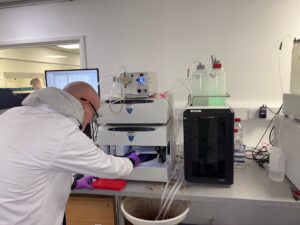
Marchwood has invested in new instrumentation to help monitor CrVl exposure to ultra-low levels, including a contemporary Ion Chromatography system. Its comprehensive service adheres to BS ISO 16740:2005 standards, and includes pre-treated filters for sampling and analytical reporting with a limit of detection (LOD) of 0.01μg (equivalent to 0.02μg/m³ for a 480L sample). Marchwood also offers flexible turnaround options, including a standard 10-working-day service and a 5 day fast-track option at an additional cost.
‘Our new equipment for our CrVl service allows us to deliver the most effective and accurate CrVl monitoring,’ continued Wraith. ‘The customer takes the sample in the worker’s breathing zone to help evaluate the extent of exposure throughout a work shift. Samples are collected on pre-treated filters and analysed using ion chromatography, with LODs designed to measure concentrations as low as <1 μg/m³, or even 0.025 μg/m³ when technically possible.’
CrVl compounds are widely used in the chemical industry for pigments, metal plating, and chemical synthesis, posing significant health risks to workers. These compounds can also be inadvertently produced during welding operations, even when chromium exists in a different valence state initially.
‘At Cawood, our commitment to continuous improvement drives us to invest in the latest instrumentation and technology,’ said Pete Allen, General Manager at Marchwood. ‘One of our priorities is to position ourselves in the best place to help our clients protect their people and adhere to environmental and occupational regulations. Ultimately, by providing accurate and reliable data like this, we are helping to support a safer, healthier planet.’
For more information on our services, contact us.