


The importance of occupational hygiene in a post-Covid world

Marchwood
Environment
As businesses gear up for team members to return to work this summer, occupational hygiene is at the forefront of peoples’ minds, with 72% believing that clean air is more important now than ever before. COVID-19 can affect peoples’ lungs, with conditions such as asthma and COPD making sufferers more vulnerable to complications if they contract the virus. Businesses and managers need to consider their teams’ increased awareness when making plans to fully reopen workplaces.
This will be a busy time for occupational hygienists, who are required to help prevent ill-health in the workplace by monitoring, reviewing and managing risks. This is achieved by investigating, identifying, evaluating and controlling a variety of agents within the working environment. There are four types of agents to look out for:
- Chemical agents may be present in the workplace as liquids, gases, vapours, dusts or mists. Direct exposure to chemical substances, such as solvents, or through work activities like fumes and gases from welding, can result in ill-health effects. Short-term high levels of exposure are linked to skin and respiratory irritants, while long-term low levels of exposure can result in chronic ill-health effects such as carcinogens.
- Physical agents include noise and vibration from equipment, as well as ionising radiation (alpha, beta and gamma rays) and non-ionising radiation (infra-red, ultraviolet, microwave and radio waves) from various types of equipment or the natural environment. Pressure and extreme temperature can also have adverse effects. Physical agents can result in a variety of health issues, such as hearing impairment and muscular disorders.
- Biological agents are present as bacteria (e.g. food poisoning bacteria), parasites (e.g. malaria-carrying mosquitos) and viruses (e.g. Ebola).
- Ergonomic agents can cause musculoskeletal issues and occur due to factors such as poor workplace design, manual handling and working with Display Screen Equipment.
Most occupational hygiene issues can be avoided by analysing samples from your workplace for any chemical, physical or biological agents before they become a risk to your team members.
Routine Analysis
Occupational hygiene analysis is conducted on a regular basis. Many routine tests are based on Methods for the Determination of Hazardous Substances (MDHS), (Occupational Safety and Health Administration (OSHA) and National Institute for Occupational Safety & Health (NIOSH) methodologies for full compliance.
Routine tests available include aldehydes, amines, ammonia, anaesthetic gases, acids and anions, biological monitoring, colophony, elemental and organic carbon (including diesel exhaust emissions or DEEs), metals, isocyanates, ozone, oxides of nitrogen, particulate and gravimetric, polycyclic aromatic hydrocarbons (PAHs), volatile organic compounds (VOC) and semi-volatile organic compounds (SVOC) analysis.
Biological Monitoring
A quick and easy way for a company to assess a worker’s direct chemical exposure is to collect a urine sample. This can then be tested for the respective chemicals or metabolites that the worker has been exposed to, including isocyanates, benzene, mercury and metals. Biological monitoring is especially useful in workplace environments where chemicals can be absorbed through the skin, and where the use of personal protective equipment, such as gloves and masks, are the main control measures.
Biological monitoring also helps businesses assess the overall safety of their workplaces. It helps to check that control measures are working, that work practices are protective, and that training is understood and adhered to.
For ease when comparing exposure limits, results are creatinine corrected in line with Health & Safety Executive (HSE) published guidance.
Diesel Exhaust Emissions
Workers who operate diesel equipment in confined areas are most at risk of exposure to DEEs. Those who operate in open environments may still be at risk, but their exposure may be reduced as a result. Good ventilation to dilute and disperse the DEEs is a crucial factor to limit exposure, as well as electrostatic face masks, which can trap greater than 90% of diesel particles. It is also necessary to ensure engines are well-maintained and serviced regularly as poorly serviced engines produce more emissions.
Acute ill-health effects of DEEs include irritation of the nose and eyes, lung function issues, respiratory issues, headaches, fatigue, coughing and nausea, while chronic exposures are correlated cardiovascular disease, cardiopulmonary disease and lung cancer.
Tests for DEEs include sampling for nitrogen, carbon dioxide, carbon monoxide, elemental and organic carbon, nitrogen oxide, nitrogen dioxide, sulphur dioxide, hydrocarbons, alcohols, aldehydes, ketones, particulate, and polycyclic aromatic hydrocarbons.
It is every company’s legal and ethical responsibility to protect the health, safety and welfare of their team members as well as others who may be affected by their business, including their customers. This is particularly important during the COVID-19 pandemic. The risk of contracting COVID-19 means businesses need to ensure team members are at least two metres away from colleagues to adhere to social distancing rules, provision of effective PPE for all, and enhanced cleaning regimes. Even post-pandemic, it is still an employer’s duty to undergo regular and thorough risk assessments to address all risks that may cause harm in the workplace, and to instruct and inform team members on how to deal with the risks. This benefits managers as much as employees: according to government figures, 38.8 million working days were lost due to work-related illness and workplace injury in the 2019/2020 period in the UK.
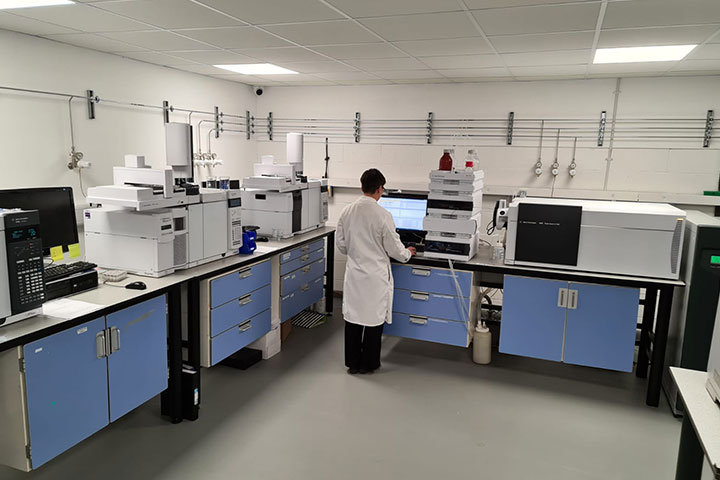
Marchwood, one of the UK’s leading occupational hygiene specialist laboratories and part of the Cawood group, offers a friendly, personalised service.
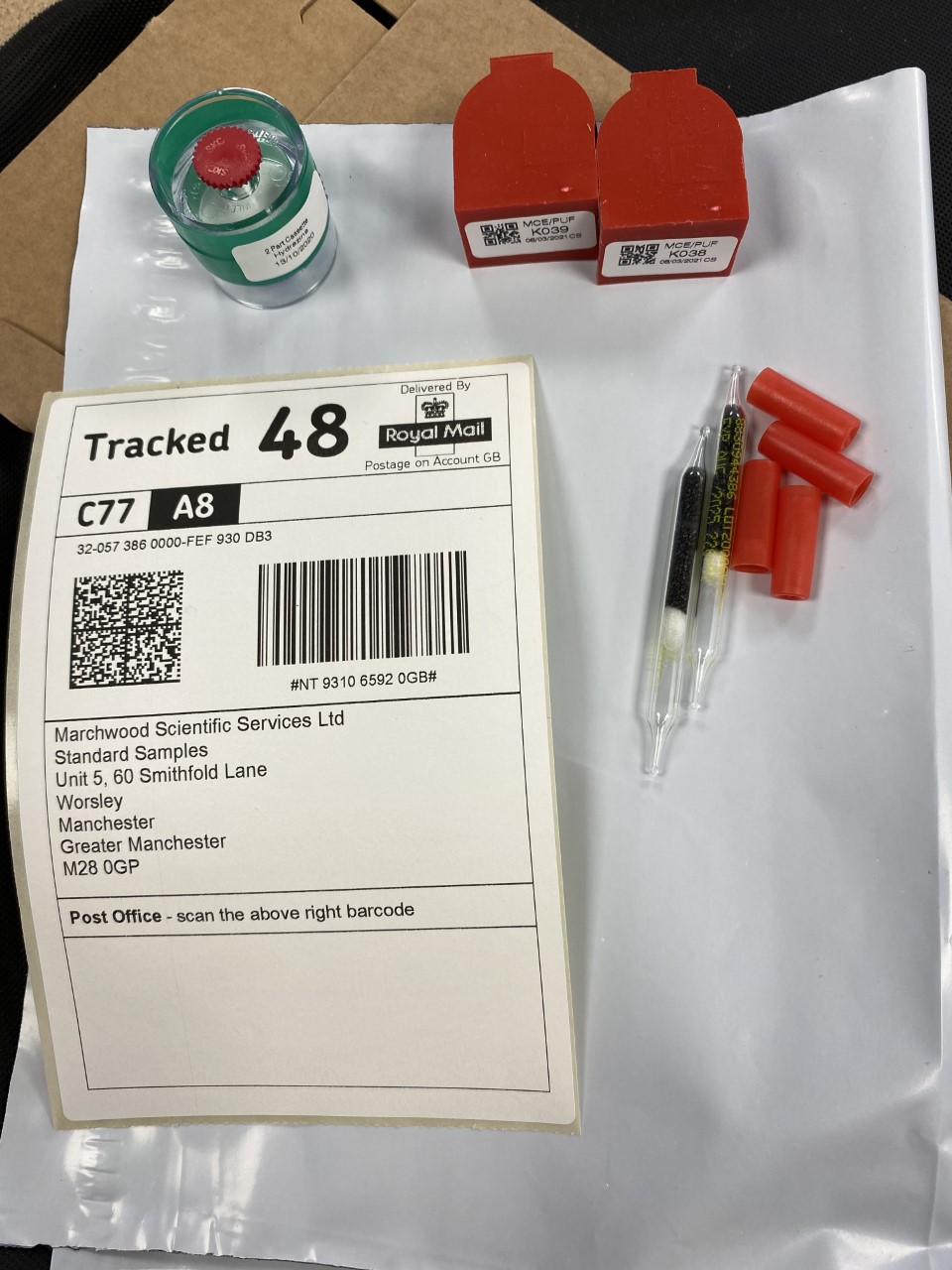
To make the sampling process for biological monitoring as easy and efficient as possible, Marchwood offers pre-paid return labels and bags with all sample kits. Completely free of charge, these comprise of a sample pot (and preservative where required), an outer storage pot, an absorbent pad, a consent form, and a return envelope. We also offer sampling media for air monitoring, which are delivered with a pre-paid envelope for return. The kits, made from reused plastic, are completely biodegradable, helping Cawood’s aim to support a safer, healthier planet.
For a quote or for more information on our services, contact Jenny, our Business Development Manager, on jenny.wraith@marchwood-scientific.co.uk.