


Keeping maternity wards safe with specialist occupational hygiene analysis
Marchwood
Environment
The UK government is cracking down on the recreational use of laughing gas. Possessing nitrous oxide, or laughing gas, will be made a criminal offence for the first time as part of a clampdown on anti-social behaviour. Concerns have also been voiced about health concerns in young people.
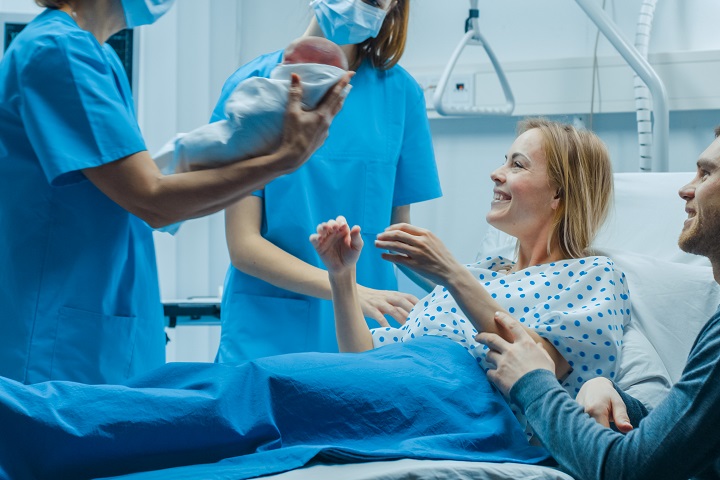
Maternity wards also use nitrous oxide, but as a pain relief method to administer to patients in labour. This is more commonly known as gas and air (Entonox). Short-term exposure to Entonox and other potentially harmful airborne contaminants offers no health risk to patients, including parents and babies. However, regular exposure over a long time can cause significant health problems for nurses and other hospital employees. Monitoring Entonox in maternity wards is crucial to help keep these workers safe.
Read on to learn more about what Entonox is, why it’s important to monitor exposure levels, and how Marchwood can help.
What is nitrous oxide/Entonox?
Gas and air is a tried-and-tested method of short-term pain and anxiety relief for a range of painful medical procedures. It is most well-known as an effective method of pain relief for women during established labour. Whilst it does not relieve all the discomfort, it can help reduce it and make it more bearable, and it can be used alongside other forms of relief. As it is self-administered through a mask or mouthpiece, it often also helps those in labour focus on their breathing, helping them feel calm and in control.
This “gas and air”, or Entonox, is comprised of nitrous oxide mixed with oxygen in a 2:1 ratio. It’s a colourless, non-flammable gas at room temperature with a slightly sweet scent and taste. It’s sometimes referred to as laughing gas because it makes patients feel light-headed and giggly.
Patients breathe the gas and air through an antibacterial filter using an airtight mouthpiece. This has a two-way valve that releases the Entonox for them to breathe in and takes away the carbon dioxide that is breathed out. Effects rapidly wear off once the mouthpiece is taken away from the face.
Whilst there are many advantages to Entonox, such as its fast-acting effects and that it is safe for the baby, there are also drawbacks that mean it must be monitored carefully. It may cause the patient to feel drowsy, light-headed or nauseous, could cause them to be sick, and it may dry their mouth out if used for a long time.
Most importantly, there is a limit to how long it can be safely used. So, patients are only given Entonox when they most need it—at the height of their labour.
In contrast, maternity workers can be exposed to Entonox over long periods of time, and so are most at risk of adverse health effects.
Why is it important to monitor exposure levels?
Long term exposure to airborne contaminants can result in significant adverse health issues for workers. As patients breathe in Entonox, particles are also released into the air, meaning that anyone working near someone using gas and air is classified as high risk.
Acute exposure to nitrous oxide can lead to anaemia due to vitamin B12 depletion. Short-term exposure decreases mental performance, audio visual ability, and manual dexterity. As nitrous oxide is neurotoxic, long-term habitual use can cause severe neurological damage.
Monitoring for nitrous oxide in workplaces where Entonox is used is important due to the rate at which it is metabolised by humans. It is minimally metabolised at a rate of 0.004%, so retains its potency when exhaled in the room. This can cause an intoxicating effect and is a prolonged exposure hazard for clinical staff if the room is poorly ventilated.
The workplace exposure limit of Entonox, put in place by the Health and Safety Executive (HSE), is 100 parts per million (ppm). By ensuring nitrous oxide monitoring is undertaken by a specialist laboratory, businesses are helping to safeguard workers and maintain compliance.
How Marchwood can help
Marchwood is the UK’s leading specialist laboratory for occupational hygiene and air quality analysis. We work with occupational health professionals, offering a range of UKAS accredited services to help businesses maintain compliance and safeguard employees, customers, and the environment. We also work closely with customers to develop new analysis methods and specialist occupational hygiene services.
Nitrous oxide can be sampled actively or passively using a molecular sieve tube. The molecular sieve tube can be placed in the room as static sample or in the workers’ breathing zone, depending on requirements.
Marchwood can supply molecular sieve tubes and then analyse the samples using thermal desorption with a Limit of Detection (LOD) of 0.5ug.
For more information or to book your tests now, contact us.