


CropCheck: what have we learnt so far?

NRM
Agriculture
Over the last week or so NRM has been looking into CropCheck (plant tissue) analysis data to review the concentration of nutrients appearing in crops at key growth stages and between seasons. The high level trends in winter wheat make for very interesting reading regarding how well we are targeting crops with the nutrients they need and if crops are on the right track to sustain growth throughout the foundation development stage.
CropCheck looks at the major nutrients and main trace elements considered important for healthy crop productivity. Results are benchmarked against peer reviewed critical value ranges, giving a better indication of how well crops have managed to recover nutrients to meet growth stage specific demands. Historically, results were compared to generic critical values which were applied to benchmark levels at any growth stage, leading to less accurate interpretation.
Winter wheat trends
As touched on in my previous blog, crops require access to different nutrients at different concentrations during the three phases of developmental growth: foundation, construction, and production. Seasonal, weather, soil and environmental conditions all define the rate of crop nutrient recovery, impacting yield overall. Therefore, every effort should be made to target applications to meet the requirement of the crop at the time.
The summarised data below indicates how well the crops analysed for nutrient content from 2021-2023 were supplied, according to the growth stage benchmarks.
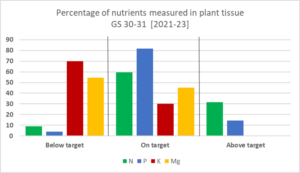
Figure 1: percentage of samples 2021-2023 within, below, or more than the critical value benchmark for the growth stage
Nutrient concentrations: GS30-31
Ensuring the optimum amount of nitrogen is supplied to crops is critical, and as such is a preoccupation for every farmer and adviser ahead of and during the growing season. The above tissue analysis data suggests that, on the whole, 60% of crops were within the target range, while 30% contained above target nitrogen concentrations. Only 9% of the samples analysed contained less than ideal levels. This suggests that crops are being supplied with more nitrogen than is required for that specific growth stage.
We can see a similar story for phosphorus. Although the data are more normally distributed, it implies that, overall, the wheat crops are being supplied with more than they need. Whilst 80% of samples were at the target between GS30-31, 14% contained higher concentrations than the benchmarks suggest is necessary for the growth stage.
The data suggests the opposite trend for potassium and magnesium. These concentrations curve more towards being below target. This could be that nutrient supplies are sub-optimal or other factors, such as weather or soil conditions, could be confounding the results and having an influence on the data.
Trace mineral concentrations: GS30-31
The majority of the trace minerals analysed met the target concentration levels for GS30-31. Between 60 and 70% of the samples analysed for calcium, manganese, copper, and iron met the benchmark target. However, an increased number of samples didn’t meet the target benchmark for zinc (50%) and boron (65%).
Zinc deficiency is not that common in the UK, and it can be confused with many other deficiencies during early growth stages. However, soil type does play a role. Organic, sandy, or highly calcareous soils with a high pH and rich in phosphate are factors influencing Zn availability to the plant.
Typically, wheat and other cereal crops do not have a huge need for boron, and are in fact sensitive to excessive levels. However, this data suggests that more than half of the crops analysed contained below target level concentrations. Soils with a pH greater than 6.5, lighter soils with low organic matter, and wetter winters/spring can all reduce the availability of boron. Drought conditions, which also reduce plant availability, could certainly have influenced the concentrations in 2022.
Nutrient concentrations: GS32-37
As the crop develops, the target benchmark levels change. Even so, the trends seen in the data at the earlier growth stage for nitrogen, potassium and magnesium persist.
Figure 2 below suggests that most samples analysed from 2021 and 2022 contain above target nitrogen levels (55%) compared to those on target (42%) for the growth stage. However, more than 95% of samples were at the target benchmark for phosphorus, indicating that supply was matching the demand of the crop at that time.
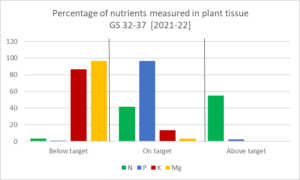
Figure 2: nutrient concentrations in plant tissue between GS32-37
NB: no data available for 2023 at the time of publication
The below target benchmark trend for both potassium and magnesium continued at GS32-37. Several factors influence the plant availability of potassium. Heavy rainfall (or irrigation) on lighter or chalky soils can result in leaching, while doughty conditions can impact on soil mobility, reducing root uptake. Acidic and heavy clay soils can result in potassium being locked-up and unavailable to the plant. These environmental and seasonal conditions could all be influencing the concentrations of potassium measured in the crop.
Soil type factors could also be affecting the uptake and concentrations of magnesium measured. Low pH and soils which contain minimal levels of organic matter are all candidates for reduced availability of magnesium. Plants placed under stress due to other factors will affect the plants’ ability to take up magnesium even when soil levels are adequate.
Trace mineral concentrations: GS32-37
At GS32-37, the nutrients meeting the target benchmarks are different than at the earlier growth stages. Between 60 and 90% of samples analysed for manganese, iron and zinc were at the target benchmark. More of the samples analysed were below the target benchmark for calcium and copper and again for boron. Calcium availability is lowered in more acidic soils, and deficiencies are most likely in lighter, free draining soils which are prone to leaching. Soils rich in sodium or aluminium can affect its availability, but calcium’s lack of mobility within the plant is more of an issue than an absolute deficiency.
Acute or severe copper deficiency in the UK is rare and only ever appears on organic sands, peat soils and reclaimed heathland. Milder symptoms can be seen in sandy or chalky soils. High nitrogen applications and over liming will predispose a crop to copper deficiency, and there may be a trend in the data to explore if high concentrations of nitrogen coexist with high copper levels.
As more CropCheck data comes into the NRM lab this spring, more insights can be gained regarding how well crops are recovering the nutrients we supply from inputs and from the soil. In the next blog I’ll be sharing more of the 2023 results as the sample size increases and trends become clearer. We will also look at seasonal variation, and how the weather affects nutrient concentrations within the plant at different growth stages.
Send in samples for CropCheck today
CropCheck is available for a broad range of cereal crops including winter and spring barley, winter and spring wheat, winter and spring oats, and rye. Growth stages range from GS30 to GS37. NRM provides a sample kit which contains everything needed to place an order for CropCheck analysis. This comes with an analysis request form, sample bags, sample posting envelope, and full instructions on how samples should be taken, prepared, and despatched to the laboratory.
Results are reported in an easy-to-understand visual format so nutrient adequacy can be determined quickly. Interpretation is also provided to guide why nutrients might be high or low. You can order your kit through your agronomist or you can order here. Alternatively, contact NRM customer services on 01344 886 338 or at enquiries@nrm.uk.com.
Visit NRM