


Could El Niño bring a wetter winter? What UK farmers need to know

NRM
Agriculture
After one of the driest growing seasons in recent memory across parts of north-west Europe, many farmers will be hoping for a return to more seasonal rainfall this autumn. However, forecasts increasingly point to the development of a strong El Niño climate event, raising the possibility that conditions could shift rapidly from drought concerns to challenges associated with excess rainfall, difficult field conditions, and flooding.
While seasonal forecasts can never provide certainty, they can help identify risks. For arable and livestock businesses alike, understanding the potential implications of El Niño can support decisions on crop establishment, soil management and farm resilience.
What is El Niño?
El Niño is a naturally occurring climate pattern associated with unusually warm sea surface temperatures in the tropical Pacific Ocean. It forms part of the El Niño Southern Oscillation (ENSO), one of the world’s most important drivers of seasonal weather variability.
Although it develops thousands of miles away from the UK, El Niño can influence weather patterns across many regions through what scientists call atmospheric teleconnections. These large-scale shifts in atmospheric circulation can alter storm tracks, rainfall patterns and temperatures far beyond the Pacific basin. For north-west Europe, strong El Niño events can affect the position and behaviour of the Atlantic jet stream, increasing the likelihood of unsettled weather during autumn and winter.
Why are forecasters watching this autumn and winter closely?
Forecasting organisations, including the National Oceanic and Atmospheric Administration (NOAA), the World Meteorological Organisation and the Met Office, have highlighted the development of a potentially very strong El Niño event during autumn and winter 2026/27.
Although El Niño does not guarantee a wet winter, previous strong events have often been linked to a greater likelihood of Atlantic-driven weather systems affecting north-west Europe. Other climate drivers will also influence conditions, but the risk of prolonged unsettled weather appears higher than normal.
For farmers, the key message is not that flooding is inevitable, but that field operations may become more challenging if wetter conditions develop during an already critical period for crop establishment.
What could El Niño mean on-farm?
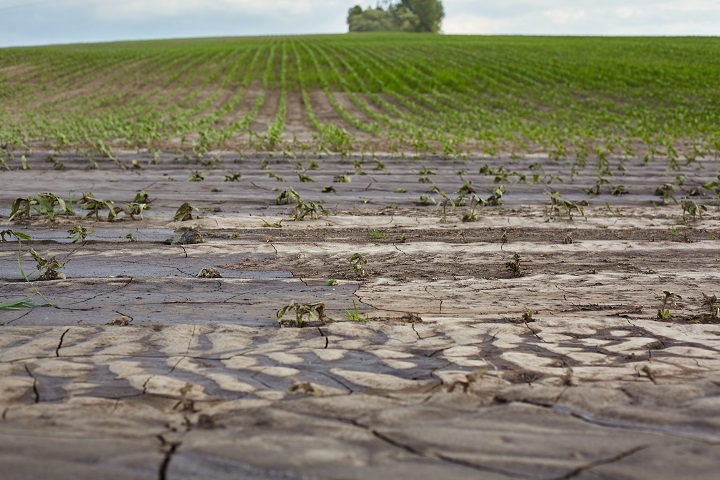
The greatest concern for many arable businesses is likely to be autumn establishment. Winter cereals, oilseed rape and cover crops all depend on timely drilling into suitable seedbeds. Prolonged rainfall can reduce fieldwork opportunities, delaying drilling and increasing workload pressure when conditions do improve. Wet soils are also more vulnerable to compaction and smearing. Trafficking land when conditions are unsuitable can damage soil structure, restrict root development and create problems that persist long after the weather improves.
Waterlogging adds another challenge because plant roots need oxygen to function effectively. When soils remain saturated, root growth slows, nutrient uptake is restricted, and crop establishment can suffer. Poor autumn rooting can reduce crop resilience throughout the remainder of the growing season.
Nutrient management may also become more complicated. High rainfall can increase nutrient losses through leaching and denitrification, reducing nutrient availability and affecting input efficiency. Nitrogen and sulphur losses can be particularly significant because of their mobility within the soil profile. Crop protection issues may also increase. Slug pressure typically rises in wet conditions, disease risks can increase, and field access constraints may complicate the timely application of crop protection products.
In many situations, success during a wet autumn is less about maximising yield potential and more about maintaining flexibility, protecting soil structure and ensuring crops establish successfully.
The best defence is under your feet
While farmers cannot influence global climate patterns, they can influence how their soils respond to extreme weather. Soils with good structure absorb and move water more effectively through the profile. Where soil aggregates remain stable and pore networks are well developed, rainfall is more likely to infiltrate rather than run across the surface. This can reduce erosion, improve trafficability and limit the development of standing water.
Organic matter and soil carbon also play an important role. Higher organic matter levels help improve aggregate stability, support biological activity and enhance the soil’s ability to cope with both drought and excess rainfall. Earthworms, roots and soil microorganisms contribute further benefits by creating channels that support drainage and deeper rooting. Cover crops can help maintain these biological processes while protecting the soil surface between cash crops. Good soil health is therefore much more than an environmental objective. It is one of the most practical tools available for managing weather-related risk and improving long-term farm resilience.
Looking beyond the farm gate
El Niño can also affect agricultural production in several regions simultaneously. Drought in some countries and flooding in others can influence grain markets, input availability and commodity prices. As a result, weather-related disruptions overseas may add volatility to agricultural markets. While this can generate opportunities, it can also increase exposure to unexpected cost and pricing pressures.
Ultimately, a strong El Niño reminds us that events on the other side of the world can still affect conditions on UK farms. While seasonal forecasts cannot predict exactly how autumn and winter will unfold, they highlight potential risks worth considering.
For many farms, the best response is not to predict every weather event, but to build resilience. Well-structured soils with healthy levels of organic matter and strong biological activity are better equipped to cope with both drought and excess rainfall. As weather variability increases, these foundations will likely become even more important to farm performance and profitability.
Reliable soil analysis that helps farmers build this resilience depends on sampling at the right soil moisture. If soils are too dry or too wet, results can be less representative and may not accurately reflect nutrient availability. Following recent rainfall, many soils across the UK have reached ideal sampling conditions: moist, but not overly wet or waterlogged. This creates an excellent opportunity to collect representative samples before soils become too wet later in the season.
How NRM can help
Building resilient farming systems requires good data. Reliable analytical information allows farmers to benchmark current performance, identify opportunities for improvement and monitor progress over time. Whether the goal is improving soil health, increasing nutrient use efficiency or demonstrating progress towards sustainability targets, robust analysis provides the evidence needed to support decision-making.
NRM‘s analytical services help farmers, agronomists and land managers assess soil health, nutrient status, crop performance and environmental indicators. By understanding how soils and farming systems are performing today, businesses are better placed to make informed decisions for the future.
For more information, click here.
Visit NRM