


Choosing the right AD feedstock: navigating challenges and opportunities in Anaerobic Digestion

NRM
Agriculture
Environment
Selecting the right AD feedstock is one of the most critical decisions for any anaerobic digestion (AD) plant operator. With rising energy demands and regulatory pressures, the focus is not just on producing biogas but on doing so efficiently, sustainably, and profitably.
In this post, we’ll explore the complexities of AD feedstock selection, common challenges faced by plants, and how regular feedstock analysis can turn potential obstacles into opportunities.
The real-world impact of AD feedstock selection
In practice, the success of an AD plant depends heavily on the choice of feedstock. While organic materials like agricultural waste, food waste, and wastewater sludge are all viable, each presents unique challenges and opportunities. For instance:
- Agricultural waste: Manure and crop residues are often readily available but can vary in nutrient content and contain inhibitors that can disrupt digestion.
- Food waste: High in energy-rich materials, food waste can significantly boost biogas production but requires careful handling due to its variability and the presence of contaminants.
- Wastewater sludge: Commonly used by water treatment facilities, sludge presents a reliable feedstock source. However, changes in regulatory standards, like the Industrial Emissions Directive (IED), increase the need for comprehensive feedstock assessment to meet compliance.
Challenges in AD feedstock management
Managing feedstock for AD plants isn’t straightforward. Some of the key challenges include:
- Variability in composition: Organic feedstocks can differ greatly depending on their source and treatment. This variability makes it difficult to predict biogas yields and may lead to inconsistent plant performance.
- Inhibitors: some feedstocks contain substances like ammonia, sulfur, or heavy metals that can inhibit microbial activity in the digester. Without identifying these inhibitors, operators risk reduced biogas production or even process failures.
- Optimising feedstock mix: Many AD plants use a mix of feedstocks to optimise performance. Finding the right combination requires careful analysis to ensure that different materials complement each other and do not introduce process disruptions.
- Regulatory compliance: The requirements for AD plants are evolving, with stricter standards for digestate quality and biogas production efficiency. Compliance with regulations, such as the IED and PAS110, necessitates ongoing feedstock monitoring and testing.
How AD feedstock analysis can address these challenges
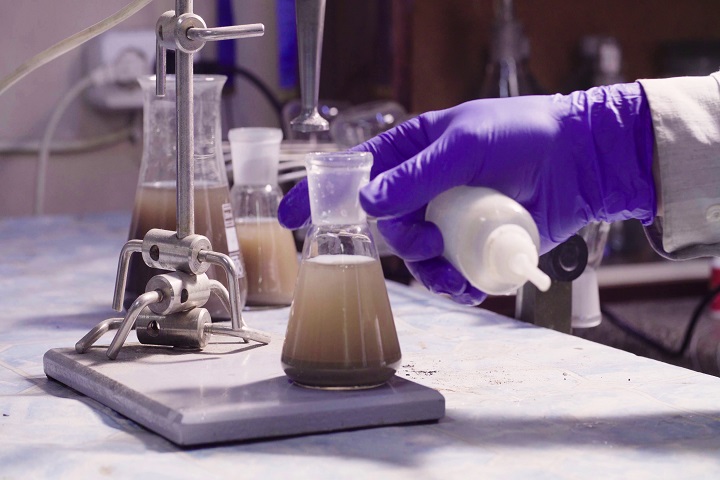
Conducting regular feedstock analysis is the key to overcoming these challenges and unlocking the full potential of your AD plant. Here’s how it makes a difference.
Operators can mitigate the risk of process disruptions by testing feedstocks for potential inhibitors and contaminants. For example, measuring ammonia levels in manure-based feedstocks allows you to adjust your process parameters to prevent inhibition.
But that’s not all what testing is useful for. Detailed analysis helps identify the best combination of feedstocks, allowing for adjustments to the mixture ratio. This balance can enhance overall digester performance, leading to consistent biogas yields and an optimal feedstock mix.
Additionally, understanding the biogas potential of different feedstocks enables you to prioritise materials that offer the highest energy output, maximising your return on investment. For instance, food waste with high fat content might be a more efficient choice than lower-energy agricultural residues.
Of course, regular testing also supports adherence to regulatory standards, such as PAS110 for digestate quality. This ensures that digestate can be safely reused, potentially adding an additional revenue stream to your operations.
Practical tips for effective AD feedstock management
- Establish a testing routine
Set up a schedule for regular feedstock analysis to track changes in composition, nutrient content, and potential inhibitors. This proactive approach helps in making timely adjustments to your digestion process.
- Consider seasonal variations
The composition of feedstocks like agricultural waste can change seasonally. Incorporate seasonal adjustments into your feedstock management strategy to maintain consistent biogas output.
- Use AD feedstock analysis to guide process parameters
Integrate feedstock analysis results into your process control strategy. For instance, knowing the volatile fatty acid (VFA) content of your feedstock can inform adjustments to loading rates and retention times, ensuring optimal conditions for microbial activity.
- Explore new feedstock opportunities
Use feedstock analysis to assess unconventional materials. By evaluating their biogas potential and impact on digester stability, you can diversify your feedstock sources and potentially increase profitability.
How NRM can help
At NRM, we go beyond basic feedstock analysis. Our comprehensive services are designed to address the practical challenges faced by AD plant operators:
- Inhibitor testing: Identify substances like ammonia and heavy metals that could impact microbial activity, helping you adjust your operations to mitigate these effects.
- Biomethane Potential (BMP) testing: Gain insights into the energy potential of different feedstocks, allowing you to make informed decisions on which materials to prioritise.
- Process analysis: Monitor parameters such as pH, volatile fatty acids, and trace elements to maintain an optimal environment within your digester.
- Tailored advice: Our experts can support you with insights on feedstock management, helping you maximise biogas production and maintain regulatory compliance.
Ready to optimise your feedstock management?
Navigating the complexities of feedstock selection and management doesn’t have to be a guessing game. With the right analysis and strategy, you can optimise your AD plant’s performance, reduce operational risks, and enhance profitability.
Contact us at enquiries@nrm.uk.com to learn more about our AD analysis services or to book your sample testing today.
Visit NRM