


Soil Organic Matter #8: Future decisions for agricultural policy in Northern Ireland

NRM
Agriculture
Since leaving the EU, Northern Ireland’s Department of Agriculture, Environment and Rural Affairs, along with England and the other devolved governments, have been reconsidering agricultural policy in Northern Ireland, determining how best to support farming, food production and the protection of the environment whilst transitioning away from direct payments. Historically and generally, farm businesses across NI have been heavily reliant on financial support and obtained a significant proportion of their income from the Basic Payment Scheme (BPS).
NI data suggests that livestock enterprises (cattle and sheep) are particularly dependent on direct payments and, on average, generate positive farm business incomes (FBI) when funded in this way. In years of particularly low prices, dairy farms have also relied on direct payments to generate a positive FBI. In most years, FBI was positive on cereal farms when given direct payments.
The proposed NI policy therefore includes payments that provide a basic financial safety net that reduces over time as financial support shifts towards supporting more sustainable actions. This financial safety net is termed the Farm Sustainability Payment (FSP).
What is the Farm Sustainability Payment?
The FSP will be pitched at a level that provides a basic financial safety net, without reducing farm innovation or productivity. The FSP is area based, uses existing entitlements, and agriculture and horticulture businesses must meet the “eligibility conditions” to apply. Businesses must be farming a minimum area of 5 hectares and own livestock (cattle and/or sheep) that are registered on the DAERA online APHIS system, which records animal births, deaths, and movements. Existing BPS entitlements will be carried forward into the new regime and current arrangements for leasing, transferring, or selling entitlements will continue.
Payments will be capped from 1st January 2024 and businesses will need to meet certain conditions and standards and undertake some basic environmental management actions (EMAs) to qualify for the FSP. The EMAs proposed at this stage are designed to improve air and water quality, increase carbon sequestration, and identify individual land parcel areas most at risk of nutrient loss to the environment.
Conditions and EMAs include but are not limited to:
- Participation in the Soil Nutrient Health Scheme (SNHS)
- Business must undertake soil testing, including light detection and ranging (LiDAR), a global remote sensing technique used to map land topography and potential environmental risk. Analysis must be updated on a regular basis.
- Development of a Nutrient Management Plan based on soil testing and LiDAR information (timeframe of NMP yet to be decided)
- Record sire identity on APHIS/NIFAIS for all calves born for dairy and beef herds (to assist the implementation of the planned Ruminant Genetics Programme).
The department is developing a crisis framework measure, which is designed to kick into action if the government has to step in to stabilise the industry in the future. DAERA is also considering the requirement for farm businesses to have a risk management plan as a conditionality of the FSP to ensure business resilience and reduce the likelihood of government intervention.
Other packages related to agricultural policy in Northern Ireland
The department is also offering other packages, including:
- Beef sustainability package – designed to improve the future profitability and environmental resilience of the sector.
- Farming with Nature package – landscape scale and collaborative participation. Being co-designed with stakeholders.
- Farming for carbon package – adoption of practical low carbon emission farming techniques, such as using feed additives or the use of urease inhibitors. Being co-designed with stakeholders.
- Ruminants genetic programme – DAERA is investing in an industry-led programme.
Click here to read the full list of proposed packages.
Farm Sustainability Standards (FSS) are being developed to replace the current NI Statutory Management Requirements (SMRs) and Good Agricultural and Environmental Condition Requirements (GAEC) that make up Cross Compliance.
What is the Soil Nutrient Health Scheme (SNHS)?
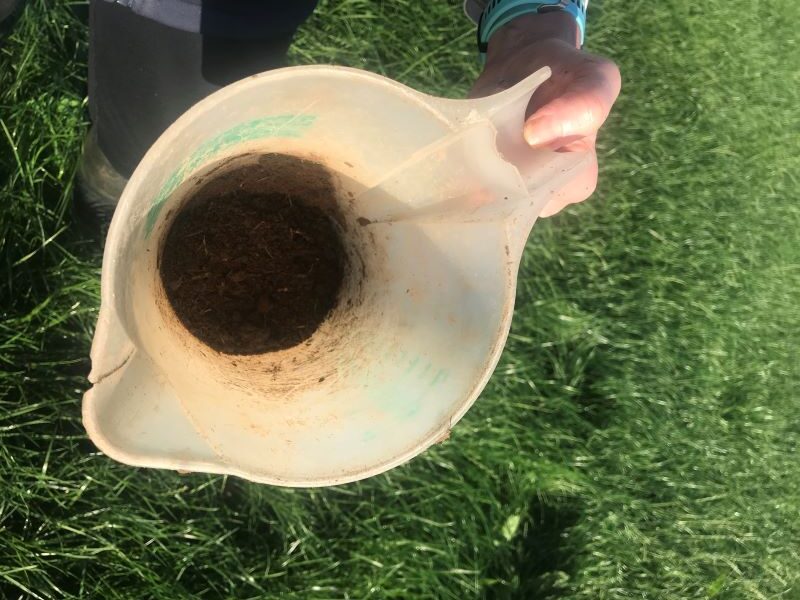
The Sustainable Agricultural Land Management Strategy (SALMS) report commissioned by DAERA concluded that, to improve soil health and the sustainability of land management, all the land in NI requires soil sampling. It also decided that nutrient management training must be given to farmers and recommended that LIDAR should be used to assess the land risk of nutrients running into water and to measure above ground biomass stock (AGBS).
These measures aim to establish a baseline and will provide a better understanding of soil carbon and AGB stocks. Click here to read the full SALMS report.
It will be a requirement for farmers to participate in the Soil Nutrient Health Scheme if they wish to continue receiving support payments under future schemes from 2024. As farmers can only join the SNHS when it is made available in their area, it is critically important that applications are made as soon as they become available.
The registration period for farmers in zone 1 opened earlier this spring and closed at the end of August. The results are available between 4 and 6 weeks after soil samples are collected from farms. The data will help farmers manage nutrient applications and understand how much carbon is stored in their soil and biomass.
Farmers with land in zone 2 should join during the registration period that will open in 2023, whilst zone 3 can join in 2024 and zone 4 in 2025. Farmers in zones 2, 3 and 4 will be notified of the specific registration dates when the SNHS is made available in their area. Click here for SNHS frequently asked questions.
The map below shows the zones, along with the registration dates for when farmers can apply.

NRM is the UK’s leading provider of agricultural and environmental waste analysis for the land-based industries. For more information on soil sampling and our range of other agricultural analysis services, contact us here.
References
https://www.daera-ni.gov.uk/publications/future-agricultural-policy-decisions-northern-ireland
Visit NRM