


Soil Organic Matter #2: How to take the perfect soil sample for organic matter analysis

NRM
Agriculture
The results of any soil analysis are only as good as the sample provided. So, any sample must be representative of the field or area under question.
Measuring soil organic matter (SOM) is the starting point to better soil management. Understanding how it behaves in the soil and its influences on soil processes can guide how and when we take samples. Read on to learn more about SOM, why we should measure it, and how to take a perfect sample for analysis.
What is SOM and why measure it?
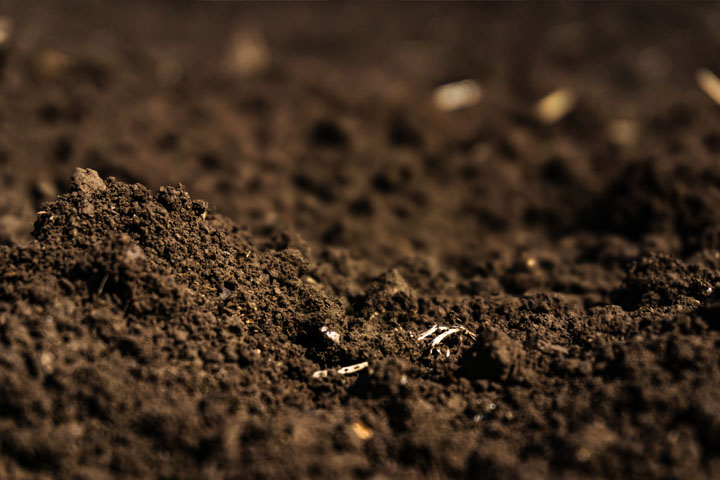
SOM is the term used for all living, or once-living, materials within, or added to, the soil. This includes roots developing during the growing season, incorporated crop stubble, or added manures and slurries.
Organic matter exists in soil principally in three main pools: as fresh plant residues and soil organisms, decomposing organic matter, and stable organic matter (humus). How much is present in soil depends on fresh organic matter inputs, their type, the amount, how quickly they decompose, and the rate at which existing SOM decomposes. The texture of the soil (clay sand silt content) and climate conditions (temperature, soil moisture, and aeration) are also important and, in combination with existing and fresh inputs, contribute to the overall SOM content.
Changes to SOM content due to agricultural management are generally small compared with the overall amount a soil can contain. Detecting changes in total SOM in the field can be a slow process so sample frequency is generally at 3 – 5 year intervals. This is enough to understand the direction of travel and the impact of farm management practices.
It is important to note that the natural levels of organic matter a soil can maintain varies depending on clay content. A sandy textured soil will contain much less compared with a clay rich soil and will have much lower capacity to build organic matter content. It is therefore important to account for the texture of the soil and the climatic conditions it is subjected to when assessing if SOM levels are good, bad, or ugly.
Sampling for SOM
When trying to benchmark or understand SOM contents, it is important to be consistent. Sampling should always be undertaken at the same time of year and at the same point within the cropping rotation so that trends can be identified and results between years compared.
There are several sampling strategies that can be followed, and it is important to choose the appropriate methodology for your farm or field. Generally, if the field to be sampled is relatively consistent in terms of soil type and prior management, then you can take a representative sample across the whole field. This is done by walking in a W pattern, taking samples as you go but avoiding headlands, gateways, and unusual areas.
If variation is obvious due to a change in soil type, cropping, or prior management, then it is sensible to stratify sampling and take representative samples from within defined areas. It is important to be aware of residues, roots, manures, and composts recently applied, as these can contaminate the sample and give abnormal results. You should obtain and combine about 20 to 25 separate cores from the field or defined area, mix them well, and then take a representative subsample for analysis.
Make sure all sample bags are clearly labelled and the request form is completed fully with all the relevant information and submit to the laboratory. If you require advice or guidance on this, talk to the NRM customer services team for clarification.
Why should you measure SOM?
Understanding the amount of organic matter a soil contains is a significant feature of the new Sustainable Farming Incentive, arable/horticultural and grassland soil standards. To participate, you must have SOM analysis data which is less than 5 years old.
It is only possible to quantify the impact of changes to management practices if we measure before and after the change has taken place. It is well recognised that applying organic materials is one of the most effective ways of improving soil quality. However not all organic materials influence or improve soil properties equally and understanding this is key. Measuring SOM can inform us on the impact our farming practices are having and lead us to the most effective ways of improving soil quality, health, and productivity.
NRM has three industry recognised tests that include organic matter analysis to suit your requirements. Read my third SOM blog that I will publish very soon to learn more.
Contact NRM or speak to your agronomist for further advice on sampling for SOM.
Visit NRM