


Turning household waste into an energy source
Marchwood
Environment
Is unrecyclable waste always a problem, or can it be a resource? For decades, we have been encouraged to be considerate with what we buy and throw away. From purchasing biodegradable plant-based milk cartons to recycling plastic bottles, tubs, trays, and containers, we all have a responsibility to be as green as possible, reducing the environmental impact on our communities and wildlife. But what about the waste that can’t be recycled?
Over 45 million tonnes of waste were sent to landfill in England in 2019. There are currently only around 500 operational landfill sites in England and Wales, and with our landfill capacity falling significantly every year, finding a sustainable, viable alternative is more urgent than ever before. Analysing non-recyclable household waste to determine its suitability for energy recovery helps to reduce the amount of waste choking our land.
Municipal waste: a surprising source of energy recovery
Processed non-recyclable household (or municipal) waste can be used to produce both Refuse Derived Fuel (RDF) and Solid Recovered Fuel (SRF).
Both waste types are processed before they can be used for energy recovery. Treatment of RDF includes removing materials that will not combust, such as metals and glass, and residual material can then shredded. SRF also goes through additional processing to improve its quality and therefore its value. This makes it an ideal high-quality alternative to fossil fuel.
RDF and SRF are burned to recover energy and generate electricity at energy recovery plants and cement kilns. Not only are they used as viable landfill alternatives, reducing the impact and pressure on our environment and the planet, but this process is an eco-friendly option. Rising landfill diversion targets has led to increased exports of RDF and SRF. On the surface, this could suggest that CO2 pollution may be increased due to the emissions produced by vehicles used to transport it. However, reports have shown that if the waste travels within 2,300 kilometres by boat or 1,265 kilometres by road, exporting it still provides more environmental benefits than tossing it into landfill in the UK.
This also means that we have a responsibility to encourage the construction of more facilities in the UK to increase the amount of RDF and SRF we process. Not only will this help to support a safer, healthier planet, but it will also provide economic benefits, such as creating more jobs for local communities and reducing odour and visual pollution of “eyesore” landfill sites.
There are waste companies in the UK that alone export over half a million tonnes per year of RDF from production plants to European waste-fuelled CHP plants. That’s 2,000 tonnes every day! RDF/SRF supply agreements are concerned with the chemical composition of the material, its physical properties, and its calorific value, which is where laboratory analysis comes in.
How RDF/SRF analysis works
Routine analysis includes, but is not limited to, gross and net calorific value, ash content, trace metals, and contaminants. Higher net and gross calorific values mean that the waste has more energy, and a low ash content is ideal as ash does not contribute towards the energy generated.
It is also advantageous to have a low quantities of trace metals and chemical contaminants in the sample. This is because waste incinerators operate under a permit, and so they are only allowed to emit certain amounts of contaminants within emissions, such as chlorine, sulphur, and heavy metals, over a period of time.
In fact, the total emissions over twelve months must be measured, as they must consistently remain below the agreed level. As the material is non-homogeneous, and concentrations could have peaks and troughs, this is the best way to ensure results are as representative as possible. Laboratory analysis of fuel material can help plant operators control their emissions.
The analysis process
Marchwood offers onsite sampling services that are undertaken with robust fuel measuring and sampling (FMS) plans, ensuring reliable, accurate, and timely results.
The waste operator will conduct a waste sampling exercise which includes cone and quartering the material to mix what is essentially a heterogenous material.
This mixing technique is due to the variety of waste that will be submitted in the same sample, such as plastic and paper. By mixing these different components together, they are generating as representative a sample as possible.
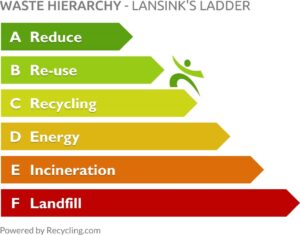
The sampling method ensures a low level of bias by not picking out the waste that would be best at recovering energy and then disposing of the rest. It is important to adhere to best practice by following the waste hierarchy and making sure waste is used for something other than landfill. This gives us the best chance to reuse waste, ensuring we are being as sustainable and environmentally conscious as possible.
Marchwood has an Untha Shredder similar to those in use at material recovery facilities. This provides further capability, allowing us to shred larger waste fractions such as from HWRC sites.
Depending on the analysis, various preparations can be completed by the laboratory prior to testing. Typically, the material will be shredded down to 2.5ml, and then further milled down to 0.5ml. This is to further homogenise the material and makes it easier to perform certain analytical techniques.
The gross and net calorific values, ash content, moisture content (which should be as low as possible), and/or the levels of undesirable metals or contaminants are then measured, depending on the customer’s specification.
Marchwood provides reports as a PDF, and summaries of past results can be supplied on Excel document upon customer request. These reports can be used by our customers in their specific communications with the environment agency.
Ultimately, this will determine how much waste the plant can burn to generate energy via combustion.
Determining the energy potential of non-recyclable household waste is a game-changer in lessening our carbon footprint by reducing the amount of waste sent to unsustainable landfill sites. Contact Marchwood to send in your samples today.