Research and Development Support
New challenges and evolving needs in the land-based industries require innovative solutions. We work closely with customers on their research and development projects, helping them to acquire powerful knowledge and insights, often leading to new methodologies and progress against objectives.
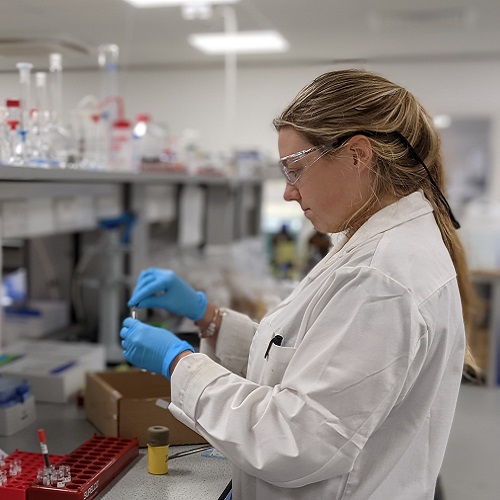
At Cawood, we help nurture your ideas into viable projects. We have extensive expertise in providing and developing innovative bespoke research and development projects for specific customer requests and can work to a specialised brief. Regular clients include university students and staff, research institutes and zoological societies. Our scientists have many years of experience, and our laboratories hold a wide range of analytical equipment and instrumentation, including ICP-OES, ICP-MS, AA, Bomb Calorimetry, IC, HPLC, LC-MS/MS, GC-MS/MS, HR-GCMS, and ICP-MS QQQ. Contact us to find out more.

Sciantec: helping endangered species to thrive
Managing conservation is a high priority for zoos, conservation trusts and zoological societies. An important factor in the preservation of endangered species is understanding nutritional requirements. Sciantec has worked with a number of organisations to ensure endangered species have what they need to thrive both in captivity and in the wild.We have generated data for the Royal Zoological Society of Scotland to analyse the nutritional composition of bamboo for the giant pandas at Edinburgh Zoo. This helped keepers to monitor and develop nutrition plans and increase the likelihood of successful reproduction.
We were asked by London Zoo to investigate why their Vietnamese Giant Magnolia land snails were eating their own eggs. Our findings, generated through development of a novel analytical suite, suggested this was due to a nutrient deficiency, which was quickly rectified, resulting in more snails being born.
We were also asked by the Durrell Wildlife Conservation Trust to compare the nutritional content of the wild Mountain Chicken Frog in Monserrat with those in breeding facilities of the Zoological Society of London. This helped the Trust determine the best dietary plan in order to secure the species’ long-term survival in the wild.
All analysis suites were developed in close collaboration with clients for specific requisites.

Marchwood: developing innovative methods for more accurate results
With a short-term exposure limit of 0.05mg/m3 and a long-term exposure limit of 0.12mg/m3, acrolein poses a real challenge when compared with other aldehydes.Marchwood has developed a new method for monitoring low level acrolein using GC/QQQ instrumentation, which is up to 1000 times more sensitive than single standard quadrupole GC/MS.
This results in more accurate results at lower exposure levels, enabling workplaces and occupational hygienists to maintain compliance whilst effectively safeguarding employees and customers.
Sci-Tech: trialling disinfectant to assess efficacy
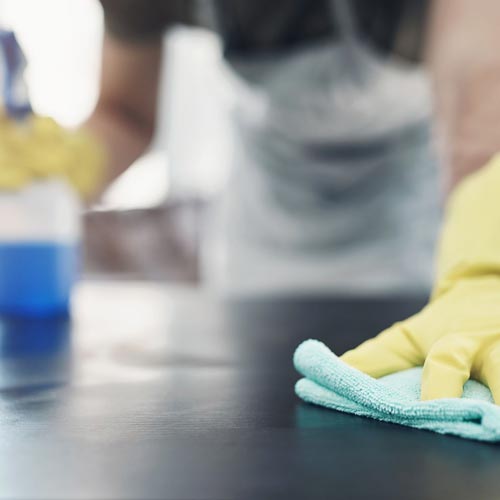
Infection control in hospitals and care homes is a key issue that must be addressed to protect the vulnerable. Sci-Tech worked closely with Aqualution to design a creative protocol to check the efficacy of the disinfectants used in a residential care home to help improve cleanliness, contain outbreaks and protect residents.Five surfaces were cleaned daily over a four-week period, with screening swabs taken before and after cleaning. The samples were then sent to Sci-Tech for microbial analysis to compare the levels of surface microbial contamination before and after cleaning with each product.
The results enabled the client to recommend which disinfectant to use and to benchmark measures for evaluating and comparing surface disinfectants. Read the full journal article here.