


Unsure of how to comply with the new Farming Rules for Water? Here’s what you need to know

NRM
Agriculture
Reducing air pollution to lower carbon emissions and combat climate change is a hot topic, but what about reducing water pollution? While we have high drinking water standards in the UK, bathing water doesn’t fare so well—86% of English rivers are not considered of ‘good ecological status’. A significant reason for this is historic overuse of artificial fertiliser, which has resulted in increased nitrate pollution in our water courses.
It is important that farmers reduce the risk of nitrate pollution to protect the environment and to comply with the Farming Rules for Water (FRfW), which have been in force since 2018 and have come into sharp focus ahead of this autumn. Today I will discuss the Environment Agency’s (EA) interpretations of these rules, what farmers should do to remain compliant without compromising on yield or profitability, and the vital roles of soil and manure testing.
A brief overview of FRfW
Announced in April 2018, the FRfW were introduced to fulfil obligations on diffuse pollution and reduce phosphorus losses to water from agriculture under the Water Framework Directive.
The rules require that “reasonable precautions” are taken to prevent diffuse pollution following the application of organic manures and manufactured fertilisers. To comply, farmers must demonstrate that they have planned for nutrient treatments to be applied in quantities that are sufficient to meet, not exceed, crop and soil requirements. This can be fulfilled by referring to a recognised nutrient management system, such as RB209.
In a nutshell, the rules require farmers to:
- Keep soil on the land;
- Match nutrients to crop and soil needs;
- And keep fertilisers and livestock manures out of the water.
Visit here for a full list of the FRfW.
Manures and their pollution impact
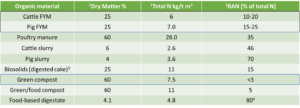
The first table shown below describes the constituents of a range of livestock and other organic materials to help determine appropriate manure application rates and avoid oversupplying total and available nitrogen. It is important to understand how readily available the nitrogen contained in manures is and to match its supply with the need of the crop. Applying organic manures/materials in the autumn increases the risk of nitrate loss to water, especially if the application rate is more than crop requirement and the readily available nitrogen (RAN) is high.
Rule 1a of FRfW dictates that manures containing RAN cannot be applied during autumn and winter, unless there is a crop need for both nitrogen and phosphate. The exception to this rule is green compost, which contains less than 3% of its total nitrogen as RAN. Restrictions already exist on the application of manures to land designated as a Nitrate Vulnerable Zone [NVZ]. Manures that contain more than 30% of their total nitrogen as RAN, such as poultry manure, cannot be applied during the autumn and winter. The FRfW are effectively extending these rules to include all autumn applied livestock manures, biosolids, digestate, and some composted materials.
Table 1 – Description of total N and RAN in livestock and other organic materials
FRfW impact assessment June 2021.pdf (windows.net).
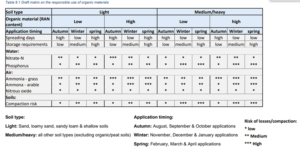
Table 2 – Draft matrix on responsible use of organic manures
FRfW impact assessment June 2021.pdf (windows.net).
Table 2 above is from a report funded by AHDB and written by RSK ADAS describing the impact of manure use and pollution risk. The draft matrix describes how the combination of manure RAN, application timing, soil type, the number of available spreading days, and storage requirements increases or decreases the pollution risk to the environment. For example, applying a manure with a high RAN in autumn to a sandy loam soil type increases the risk of nitrates escaping into water. Conversely, applying a manure with a low RAN in winter to a sand clay loam soil type has a low risk of nitrate and phosphate escaping into water.
What the EA expects from farmers from Autumn 2021
Farmers are encouraged to engage and work with the EA to improve management practices. If autumn applications are essential because farms do not have the capacity to store manures or they can’t be exported, then applications can be made to fields of low risk. In this case, the EA must be notified by a regulatory position statement (RPS 252).
The EA wants to see a plan that demonstrates a change in how manures are handled and utilised. After all, these materials are a fantastic resource that contribute significantly to the health and functionality of the soil. It must be proven that manures are being unavoidably produced, cannot be stored at the farm or in appropriate field heaps, cannot be exported and stored elsewhere, and that the land is at low risk of leaching or surface run-off.
For clear steps on how to comply, and a checklist on what kind of land is categorised as low risk of leaching, click here.
How NRM helps farmers comply
To comply with the FRfW, farmers and advisers must plan and follow a nutrient management plan based on the most recent soil analysis (P, K, Mg and pH) and spring soil mineral nitrogen sampling. NRM provides soil and manure testing services for insightful and efficient nutrient management, agronomic productivity, compliance, and environmental protection—including keeping our waters clean. Analytical data helps farmers calculate and justify the right autumn manure application rates and guides remaining spring manure and fertiliser applications.
NRM offers all these services and can give advice on the most appropriate analytical tests required.
The final takeaway here is if you follow best practice and try your hardest to comply and justify your actions, then the EA will sense the commitment to good management and preparedness to change to minimise the risk of losses to the environment. Soil and manure analysis will help you make the best decisions possible for your crops, as well as helping you remain compliant with the FRfW.
Contact me for further advice or visit our website for more information on NRM’s testing services.
References
www.gov.uk/government/publications/spreading-organic-manures-on-agricultural-land-rps-252
www.planet4farmers.co.uk/manner.aspx
https://www.gov.uk/government/news/new-farming-rules-for-water
Visit NRM