


Why farmers should invest in grain analysis: part 2

NRM
Agriculture
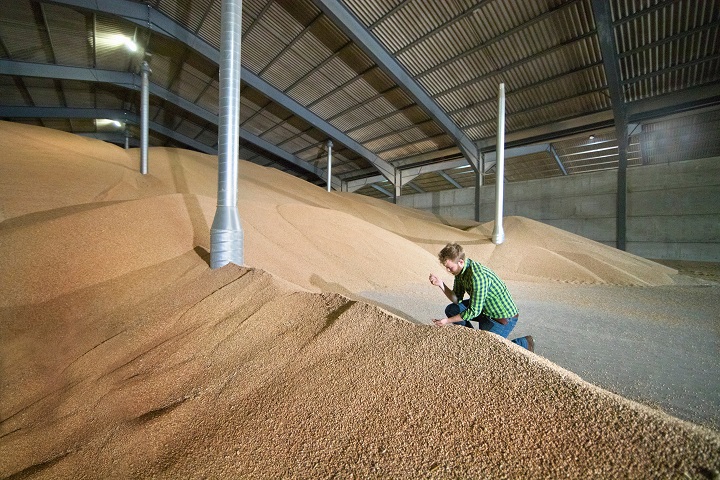
Harvest is here, making it a busy time for farmers across the UK. Even so, it’s important to start planning next season’s nutrient management plans and consider taking samples for grain analysis.
Investing in grain analysis for cereal crops provides a definitive nutrient audit, revealing exactly what the crop has recovered by harvest. This becomes particularly important when transitioning farming systems or incorporating organic inputs, as soil tests alone cannot predict the timing of organic nutrient release or how efficiently those nutrients are taken up by the crop.
We recently published a blog giving 5 agronomic reasons why farmers should invest in grain analysis – you can read it here. Here’s 6 more reasons, this time around how grain analysis helps you optimise crop nutrition.
6 reasons why farmers should invest in grain analysis: helping optimise crop nutrition
Taking nutrient imbalances from one season to the next is entirely avoidable during grain analysis. This is particularly important during a systems transition, when it can be difficult to know you’re moving your farm in the right direction.
1. Validating nutrient release from organic inputs
Organic manures, slurries, and digestates release nutrients at variable rates, depending on soil type, application timing and method, weather conditions, and soil biological activity.
Additionally, uncertainty around nutrient availability (driven by climate change and soil biological activity) means that, if farmers choose to apply organic manures or digestate to minimise fertiliser inputs nutrient availability, they have no idea how much nitrogen and sulphur the crop is likely to recover. This risks a drop in yield or quality or wasting supplementary bagged fertiliser, particularly if farmers don’t feel confident enough to reduce fertiliser inputs.
Grain analysis measures the final uptake of macronutrients such as nitrogen (N). This helps confirm whether organic nutrient contributions correctly offset the required rate of inorganic applications, or whether future input rates need to be adjusted up or down.
2. Monitoring phosphorus availability during system transitions
Moving to a regenerative or low-input system means minimising or eliminating the application of compound fertilisers. Additionally, standard soil tests can mask a “silent” phosphorus starvation if transitioning soil biology isn’t yet functioning to unlock soil-bound reserves.
Testing grain phosphorus (P) levels acts as the ultimate test of this transition, giving farmers a direct indication of phosphorus uptake efficiency.
If grain P falls below the critical threshold of 0.30-0.32%, it indicates that the crop’s roots or soil biology (i.e. mycorrhizal fungi) failed to access sufficient soil phosphorus. This signals that the soil structure or biology require attention.
3. Diagnosing potassium efficiency and straw strength
Cereals require large amounts of potassium (K) for water regulation, disease resistance, and straw strength to prevent lodging. Cereal crops may look healthy, but a transient hunger for potassium (K) is restricting carbohydrate assimilation to the ear. This caps specific weights and leaves the crop vulnerable to lodging in the weeks running up to harvest.
Grain K analysis assesses the plant’s overall potassium status during the grain-filling period, revealing the hidden deficit that occurred during grain fill. This provides precise data to correct soil potash availability and build stronger, more lodging-resistant crops for future rotations.
4. Correcting the crucial nitrogen-to-sulphur ratio
Pushing nitrogen inputs to hit milling or malting premiums, but not checking available sulphur levels, can prevent the plant from converting additional nitrogen into quality proteins. A higher ratio indicates a sulphur deficiency, which restricts the plant’s ability to convert nitrogen into proteins. This results in poor baking quality, low Hagberg Falling Numbers, and wasted nitrogen fertiliser, leading to low grain nitrogen content, lower premiums, wasted inputs, and higher production costs.
Grain testing checks the critical N:S ratio to ensure it remains below 17:1. If the ratio is exceeded, extra sulphur must be applied to the next crop to fully unlock nitrogen investments.
5. Identifying hidden micronutrient deficiencies
Micronutrients act as catalysts for yield and grain quality, but deficiencies are often invisible in the field. When present, they subtly reduce pollen viability, lead to poor ear fertility, and result in less viable and resilient home-saved seed.
Grain analysis screens for critical trace elements:
- Manganese (Mn) and copper (Cu): vital for ear fertility, pollen viability, and grain set
- Zinc (Zn): essential for enzyme function and early seedling vigour if retaining home-saved seed.
Identifying these deficits allows you to apply targeted foliar trace elements at key growth stages in future cereal crops.
6. Benchmarking system performance and preventing yield plateaus when shifting tilling systems
Switching from a plough-based system to direct drilling, strip-till, or min-till can improve soil structure over time, but the transition phase often brings challenges. In the short term, residual compaction, stratified nutrients, and cooler, denser soils can restrict early root development and rooting depth. This can lead to inconsistent crop performance or a gradual yield plateau over several seasons – issues that standard soil tests may not detect.
Annual grain analysis allows farmers to benchmark their new system against historical data and previous performance. It ensures that changed soil management is actively improving nutrient uptake efficiency rather than causing a temporary or more chronic decline in crop health and performance.
How NRM can help you invest in grain analysis
Grain analysis not only reveals how crops performed, but also how farming systems can adapt and improve to better handle future extremes.
NRM’s GrainCheck and GrainCheck Plus analysis services include the major nutrients and key minor nutrients essential for healthy crop growth.
Our easy-to-read reports include known benchmark nutrient thresholds (pertinent to wheat) and explain how your crops compare. These insights, including expert advice, guide farmers and advisors in adjusting their nutrient strategies to achieve more sustainable crop production.
You can also use our GrainCheck calculator to help you work out how many kilograms per hectare of nutrients have been removed by the crop at harvest.
With harvest underway, now is the time to plan the collection of grain samples. For more information or to arrange analysis, speak with your agronomist or contact NRM directly.
References
- System Benchmarking & Nutrient Traps: Broad dataset trends on macro and microelement deficiencies across UK farms are provided by the YEN Nutrient Benchmarking Network managed by ADAS.
- Critical Nutrient Targets (P, K, N:S): The definitive guidance on keeping the Nitrogen-to-Sulphur ratio below 17:1 and monitoring potassium intake to prevent lodging can be cross-referenced using the AHDB Grain Nutrient Analysis Guidance.
- Organic Input Performance & Soil Structure: Commercial benchmarking insights regarding how weather, organic matter, and compaction limit mineralisation are validated by laboratories like Cawood.