


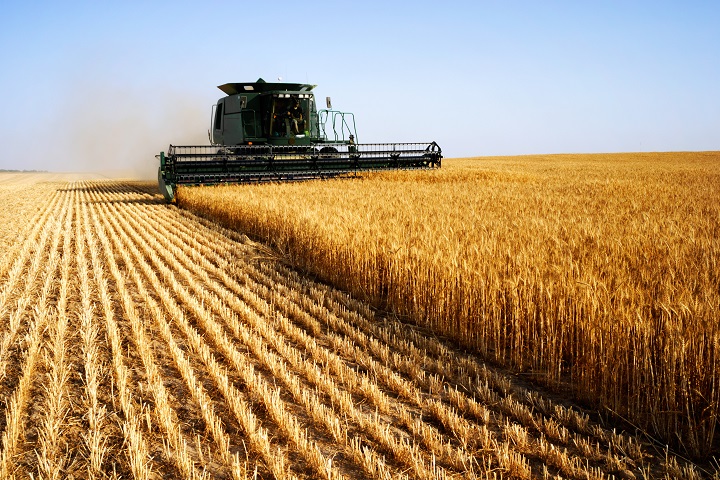
Why farmers should invest in grain analysis: part 1

NRM
Agriculture
Harvest has officially begun. As we get further into summer, it’s also time to consider how farmers can improve nutrient management plans for next season by looking at how this season went.
This is where grain analysis comes into play.
Investing in grain analysis allows UK farmers to optimise crop management and protect yield and quality. Testing grain at harvest provides a direct post-mortem of the growing season, helping farmers to make data-driven decisions for the following year.
Here are 5 agronomic reasons why farmers should invest in grain analysis.
5 agronomic reasons why farmers should invest in grain analysis
Grain analysis isn’t just a final step in a farmer’s annual nutrient management programme. Often, there are specific factors or risks that need to be taken into consideration to protect margins and manage operational risks effectively.
1. Grain analysis confirms the accuracy of nitrogen strategies
Grain protein content is a direct indicator of whether your nitrogen fertiliser strategy was effective.
In terms of wheat, a protein level of 11-12% indicates that nitrogen applications were perfectly optimised for yield. Levels below this suggest the crop was under-fertilised and therefore lost yield potential, while higher levels in feed wheat mean nitrogen was over-applied, wasting money and risking subsequent nitrate leaching over autumn and winter. So, the risk of basing NUE measurement on grain yield alone means growers could be over- or under-supplying expensive fertiliser.
Grain protein testing tells you exactly how accurate a nitrogen strategy was. Hitting 11–12% protein proves that fertiliser applications were optimised for the maximum economic yield.
2. Grain analysis identifies hidden nutrient deficiencies
Standard soil and tissue tests show what nutrients are present in the soil and crop early to mid-season, but they do not show what the plant actually managed to recover and remove from the field. This leaves farmers vulnerable to invisible deficiencies that cap future crop performance and diminish soil indices.
Grain analysis acts as the ultimate crop report card, revealing the precise quantities of macro and micro-elements that were successfully translocated into the seed and removed.
NRM’s GrainCheck service identifies critical deficits in macronutrients (such as phosphorus and potassium) and micronutrients (such as zinc, manganese, and sulphur). This allows farmers to better target specific crop nutrients to certain fields or crops and develop effective nutrient management plans.
3. Grain analysis evaluates the on-farm performance of new varieties
Did you know that not all crop varieties perform equally across different UK soil types and regional climates?
Choosing new crop varieties solely based on national or regional trial data can be risky. This is because a variety that performs well in a trial plot in Shropshire might not deliver the same results or cope with specific agronomic issues on an individual farm, such as soil type variation, aspect, and disease pressures accelerated by a changing climate.
By analysing the yield and nutritional profile of different varieties grown on their own land, farmers gain unbiased data. If they combine these results with national/regional recommended lists, instead of relying solely on them, they can select the most resilient, nutrient-efficient varieties for future rotations.
4. Grain analysis helps to fine-tune soil health and phosphate management
Phosphate availability is a challenge in UK high-pH soils due to locking-up or complexing mechanisms (even when applications are being made). This is because soil phosphorus is being locked up by chemical matrices or restricted by a compacted soil layer that roots cannot penetrate, resulting in underperforming crops. Grain phosphorus levels indicate whether the crop has accessed sufficient soil phosphorus.
Testing grain phosphorus levels checks if the crop has actually accessed and metabolised this key nutrient. If grain P falls below 0.30-0.32% despite high soil indices, it sounds an early alarm to investigate the soil’s physical structure and its biological activity, and encourages a more in-depth review of the chemical interactions within the soil.
5. Grain analysis quantifies nutrient offtake to optimise replacement strategies
Standard fertiliser recommendations often rely on average nutrient offtake values, which don’t reflect the true quantities of nutrients removed from individual farms season by season. This can lead to a gradual mismatch between what is removed in the grain and what is replaced by inputs, resulting in the mining of soil reserves over time or over-applying fertiliser unnecessarily, increasing the cost of production.
Grain analysis measures the actual quantity of nutrients removed from the field at harvest, providing a precise picture of nutrient offtake. NRM’s GrainCheck calculator is vital here, as it converts results into nitrogen, phosphorus, potassium, and magnesium offtake, helping farmers:
- Understand exactly what has been exported in the grain
- Design more accurate, field-specific nutrient replacement strategies that protect both soil fertility and long-term profitability.
We will be publishing 6 more reasons why farmers should invest in grain analysis very soon, so watch this space!
How NRM can help
Grain analysis not only reveals how crops performed, but also how farming systems can adapt and improve to better handle future extremes.
NRM’s GrainCheck and GrainCheck Plus analysis services include the major nutrients and key minor nutrients essential for healthy crop growth.
Our easy-to-read reports include known benchmark nutrient thresholds (pertinent to wheat) and explain how your crops compare. These insights, including expert advice, guide farmers and advisors in adjusting their nutrient strategies to achieve more sustainable crop production.
You can also use our GrainCheck calculator to help you work out how many kilograms per hectare of nutrients have been removed by the crop at harvest.
Now harvest has begun, now is the time to plan the collection of grain samples. For more information or to arrange analysis, speak with your agronomist or contact NRM directly.
References
- Nitrogen Use Efficiency & Milling Targets: Data regarding the 11–12% optimized protein targets and specific milling thresholds are sourced from the AHDB Cereal Quality Survey and the industry-standard AHDB Nutrient Management Guide (RB209).
- Organic manure availabilities and advice on nutrient management https://adas.co.uk/services/nutrient-management-planning/ https://projectblue.blob.core.windows.net/media/Default/Imported%20Publication%20Thumbs/RB209/2023/NutManGuideRB209S2_230526_WEB.pdf https://ahdb.org.uk/grain-nutrient-analysis-and-its-role-in-management
- Phosphate Thresholds & Benchmarking: The critical 0.32% Phosphorus baseline was established through extensive UK research and is outlined in detail by the FAS Technical Note on Grain Analysis for Cereals.