


How weather affected UK crop growth in 2025: grain analysis for sustainable crop production

NRM
Agriculture
Environment
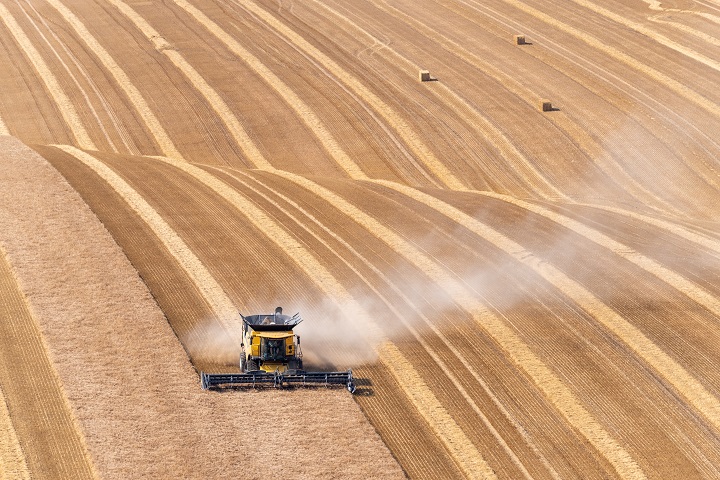
It pains me to say, but it’s harvest time! This means it’s the perfect time to reflect on how the season has gone, if we could have done anything differently, and how well our crops coped with the challenging early warm and dry conditions. Grain analysis for sustainable crop production is not only a powerful tool for reviewing performance, but also for building resilience and sustainable practices into future seasons.
No two years are ever the same, and many of the variables that affect yield are beyond our control. However, understanding how crops performed under stress and identifying the management decisions that made a difference can be transformational. Understanding how to insulate ourselves from challenging seasons is the holy grail, and NRM’s GrainCheck services can help point you in the right direction by giving you actionable insights.
The crucial role of weather and grain analysis for sustainable crop production
The weather has a significant impact on the success of our cropping year, and 2025 has been no exception. We know that climate change is influencing our weather patterns, resulting in warmer and drier springs and summers, while autumn and winter are becoming wetter and milder. So, we need to employ management strategies that help our crops mitigate the worst effects of the weather.
Although we can’t control rainfall or temperature, but if we could better manage how weather variations affected yield and quality, we can grow our crops more sustainably, both financially and environmentally. GrainCheck can help us monitor how crops have responded to seasonal challenges. Grain analysis also plays a significant role in assessing the shift to a new management approach, such as precision farming or aspects of regenerative agriculture, and can highlight nutrient deficiencies, which may or may not be induced by the season.
Linking grain analysis for sustainable crop production with other forms of testing, such as soil nutrients, organic matter, and crop tissue analysis, can help build a complete picture of how well your farm management approach is working with natural systems. While grain analysis offers an effective post-mortem of your past strategies, it’s also a positive investment in your future farm productivity.
Spring 2025 weather patterns and how they have affected crops
This spring has had some of the driest weather on record, and when it did rain there was huge regional variation. In the driest regions, nutrient uptake would likely have been reduced in winter sown crops. Spring sown crops were especially affected where germination and establishment due to the lack of rain was impacted. Where timely rain fell—particularly between GS39 (flag leaf) and GS60 (flowering)—winter sown cereals were in a good position to recover previously applied nutrients, helping to boost both yield and grain protein levels.
Grain analysis for sustainable crop production can identify how much nitrogen and other key nutrients were recovered from applied fertiliser and the soil during these periods of sporadic rainfall in the spring. This is important for understanding how much is left in the soil system after harvest, what’s at risk of overwinter leaching, or what is available to help in establishing the following crop.
Improving soil to withstand weather extremes with grain analysis for sustainable crop production
The structure of soil at its surface and to depth can affect the rate at which rainwater can effectively infiltrate. More often than not, soil surface run off occurs and, when it rains, water quickly washes off into ditches or onto roads and into drains. This action is influenced by several factors, including soil texture, structure, surface capping, moisture levels in the soil, and the presence or absence of green cover.
Typically, different soil textures have different water infiltration rates:
- Sand: 19-25mm/hr
- Loam: 9-13mm/hr
- Clay: 3-8mm/hr.
Watch this video to understand how you can measure infiltration rates on your farm.
Improving soil structure, avoiding compaction, soil surface capping, and maintaining green cover are all management strategies that are within your control. This is important not only for soil water management but to build a well-functioning soil system.
A well-functioning soil system includes improved aggregate stability, resulting in better aeration, greater soil biodiversity, and leading to stronger rooting, all of which promote sustainable productivity and build resilience into a system fit to cope with the challenges of climate change.
Grain analysis serves as a barometer for how well your farmed soils are functioning chemically, physically, and biologically, and how you manage your farm’s environment can go a long way in explaining the results. For example, you can’t change your soil texture, but you can be aware of the likely deficiencies some textures cause, enabling you to proactively adapt your fertilisation strategy to meet crop specific needs.
This approach could lead to a change in crop rotation and/or ensuring that sensitive crops receive a balanced nutritional programme that protects them from deficiencies, which would impact their growth and productivity.
Best practices: how to take grain samples effectively
To make the most out of grain analysis for sustainable crop production, accurate sampling that is representative of the area used to grow the crop is essential because results are only as good as the samples sent for analysis.
Follow these easy steps to ensure good sample quality:
- Take samples from representative fields, or areas of fields where routine soil analysis is taken
- Take samples from every trailer load as grain is tipped
- Mix grain thoroughly and sub-sample around 200g
- Use clearly labelled sample bags with all relevant field/farm information
- Complete and include all necessary paperwork with samples.
How NRM can help
The 2025 season has demonstrated the unpredictability of UK weather and its impact on crop growth. But with tools like GrainCheck, growers can turn challenges into opportunities. Grain analysis not only reveals how crops performed, but also how farming systems can adapt and improve to better handle future extremes.
NRM’s GrainCheck and GrainCheck Plus analysis services include the major nutrients (N, P, K, Mg, and S) and key minor nutrients (Mn, Zn, Cu, Fe, B., [Mo]) essential for healthy crop growth.
Our easy-to-read reports include known benchmark nutrient thresholds (pertinent to wheat) and explain how your crops compare. These insights, including expert advice, guide farmers and advisors in adjusting their nutrient strategies to achieve more sustainable crop production.
You can also use our GrainCheck calculator to help you work out how many kilograms per hectare of nutrients have been removed by the crop at harvest.
To learn more about how GrainCheck and GrainCheck Plus can support your farm’s goals, contact us or discuss with your agronomist.
References
Water infiltration test | AHDB
Soil Considerations for Water Management | Rivulis
Visit NRM