


Optimising sulphur nutrition: key takeaways from the NRM/Rothamsted webinar

NRM
Agriculture
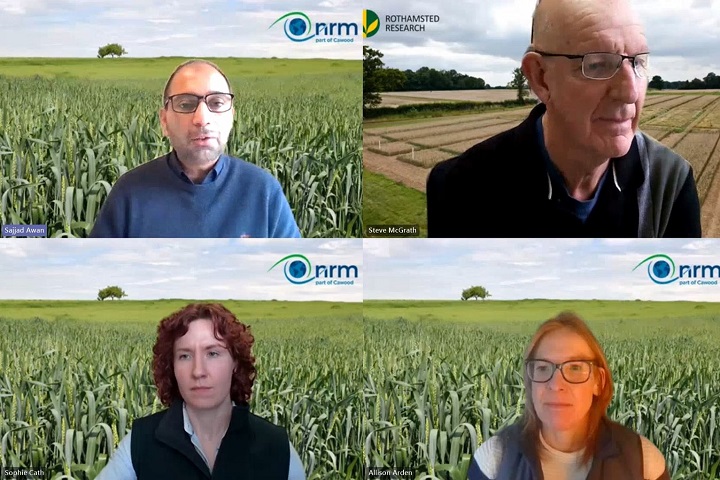
On Wednesday 19th February, we hosted an informative webinar entitled “Optimising sulphur nutrition to maximise yield and quality”. Whether you attended or not, we are sharing key Q&A insights from the session here, from the latest research on sulphur and its impact on agriculture to insightful data, practical insights, and innovative strategies for optimising sulphur nutrition.
The full webinar recording is now available, so you can also catch up on all the key insights and expert discussions at your convenience here.
Q&A highlights: optimising sulphur nutrition
#1: What is the S content in plant digestate?
Did you know that the sulphur content in plant digestate can vary? According to RB209 Section 2, there is some guidance available, but it’s essential to conduct specific testing to determine precise levels.
The second part of the story is understanding and estimating how much sulphur is available to the crop, which is where the real difficulty lies. The release of sulphur will depend upon when and how the material is applied, and if some sulphur complexes in the soil before the crop gets a chance to recover it. So, there are quite a few parameters to think about. It’s often best to underestimate the supply and make sure you supplement enough with applied fertilisers.
Ultimately, understanding sulphur content through analysis helps optimise nutrient management and crop yields.
#2: What are the S measurement methods?
Measuring sulphur accurately is key to effective soil and crop management. The most common methods include Inductively Coupled Plasma Optical Emission Spectroscopy (ICP-OES) and Ion Chromatography. These techniques help determine sulphur in solution, ensuring precise nutrient application.
An alternative but highly effective test for soil sulphur, frequently referenced in RB209, is the malate sulphate test.
#3 There seems to be a lack of sulphur being applied to grassland. Why?
Why aren’t we applying enough sulphur? One reason is the reduction in atmospheric deposition over the years, which reduces the amount of sulphur being applied in land naturally from emissions.
Another factor is the shift in fertiliser strategies. Farmers may think that manure applications are delivering enough available sulphur for the whole season. However, whilst there may be more than enough organic matter available, implying sufficient sulphur, in practice it’s difficult to predict when sulphur may become available.
Finally, the fertiliser products available to livestock farmers may play a role. They don’t always get offered or purchase fertiliser products containing sulphur, particularly if they are more expensive.
While many focus on nitrogen, phosphorus, and potassium, sulphur is often overlooked despite its critical role in crop health.
#4 Is there likely to be an S-response on potatoes? What about sugar beet?
Research shows that sulphur response varies between crops. While RB209 doesn’t explicitly recommend sulphur for all crops, trials indicate that potatoes may benefit, particularly in sulphur-deficient soils.
Data suggests that sulphur deficiency is more prevalent now than 25 years ago, so it seems logical that more crops would benefit from routine applications. However, the data on sugar beet is lacking, so the response rate is difficult to determine.
#5 Do you know anything about sulphur crop deficiencies in other European countries?
Yes, sulphur deficiency has been observed across large parts of northern Europe particularly (but not the dry lines of the Mediterranean).
Whenever you have excess winter rainfall, you then have a sulphur problem. High requiring crops or brassica crops all seem to be responding, and indeed the cereals are affected in the same way as they are here. Across Denmark, Germany and Scandinavia, which used to suffer from so-called acid rain—which contains sulphur—drop responses are shown in crops across quite large areas of northern Europe.
#6: Are there any plants that can fix sulphur or bioaccumulate it, which can then be cut and dropped?
There are plants which are very rich in sulphur which can help. Brassica or any sort of break crop might be very rich in sulphur because they accumulate a lot of it, and then, if you make sure that’s incorporated, that sulphur may be more available for the next crop.
#7 Interest is growing in the use of foliar applications. Can sulphur be applied using this method?
It’s not very common to apply sulphur in this way. It’s important to remember that, even though we might think that the leaves are receiving all the sulphur, they don’t—it drips off onto the soil and instead goes in through the root system.
It’s likely that farmers would get the same application rate with fertilisers. It may even be a good idea to split applications during the rapid growth phase of the crop rather than hitting it all once, like we do with nitrogen fertiliser. So yes, you can use foliar applications, but they may not pose any more benefits than fertiliser applications.
#8 Do you think sulphur recommendations are high enough to produce high yielding crops (11 t/ha average)?
RB209 suggests that not all crops require sulphur. However, recent observations indicate that most crops may now require supplementation. This necessitates a reassessment of RB209 recommendations.
Regarding application rates, nutrient availability from organic sources such as manure, slurries, and digestate aligns with the period of rapid crop growth, making applications around April particularly effective. The key question remains whether current application rates are sufficient to meet crop demands. Given that RB209 is an evidence-based document, further field trials are required to validate and refine these recommendations.
A crucial factor influencing sulphur availability is the significant reduction in atmospheric deposition due to improved air quality. With atmospheric sulphur no longer serving as a reliable source, crop nutrition strategies must be reconsidered to ensure adequate supply. Conducting trials will be essential in updating fertiliser recommendations accordingly.
#9 Do you have any data which looks at the relationship between SOM and available SO3?
Rothamsted’s long-term experiments found that you do get more mineralisable sulphate from organic treatments, such as organic manure, or if you’ve got long term grasslands and very high organic matter. The question, though, is whether that’s enough at the time of spring growth.
It’s the same story as with nitrogen: quite a lot of manures are applied in the autumn, and so there’s a lot of mineralisation. While there’s almost no plant growth during the winter period due to excess rainfall, a lot of the sulphate and nitrate washes out, so how much is left at the time that plant really needs it and needs to take up a lot very rapidly is always the key factor.
Professor Steve McGrath, Discovery Leader at Rothamsted, concluded that:
- Even with farmyard manure, it’s not going to supply all your sulphur in in the spring
- Farmers need to make sulphur available to their crops with additional applications.
What about questions that weren’t answered in the webinar?
We have also shared answers to any unanswered questions from the webinar for our second blog in the series, including:
- Is there any correlation data for grassland in relation to sulphur and the other nutrients, such as crop tissue analysis? What does it suggest?
- Should we adjust application rates when vegetables are in rotation?
- What is the most sustainable way to apply sulphur-high fertiliser?
…and more!
For more insights on optimising sulphur nutrition, read our second Q&A blog here.
How NRM can help
NRM provides UKAS accredited soil analysis, as well as manure and slurry testing services to help you determine nutrient content and requirements. With accurate, timely data, you can make informed decisions on application rates, saving on fertilisers and boosting productivity. Get in touch today or speak to your agronomist.
For more information on our services, contact us.
Visit NRM