


Have you taken soil mineral nitrogen (SMN) samples for analysis yet?

NRM
Agriculture
Spring is fast approaching. This period is a crucial time for farming activities, particularly fertiliser and manure spreading. The close of January saw the Nitrate Vulnerable Zones (NVZ) closed periods for applying manures and fertilisers ending, many livestock farmers started applying slurries as soon as, and many arable farmers are now on the cusp of starting their spreading campaigns. This means starting soil mineral nitrogen sampling.
As farmers and advisors are well aware, the cost of fertiliser inputs seems permanently in flux, influenced by global conflicts and shifting supply and demand. For the latest market prices, check out the AHDB update here. Minimising our reliance on fertilisers and better targeting applications can significantly lower production costs and reduce a crop’s carbon footprint. Understanding the supply of nitrogen in soil is key to achieving increased profitability and to inform decision making. But for maximum benefit, it is crucial to follow field selection guidelines.
Soil mineral nitrogen sampling: choosing the right fields
Nitrogen fertiliser is expensive, whichever way you look at it, but it is also the most responsive input, particularly when applied to crops that need it the most. The first step in reducing fertiliser costs is selecting representative fields for sampling where fertility is judged to be high. Another cost-effective approach is to sample fields that best reflect a block of fields growing the same crop.
To better manage soil nitrogen supply and fertiliser application rates, soil samples should be collected from land parcels representing various positions within the crop rotation and soil types. We advise prioritising fields where past management practices are unknown, as well as those that have previously (at least 6 weeks prior) received manure applications.
Whilst trying to cover all the bases may seem daunting, developing a comprehensive picture of your soil nitrogen supply across the farm is the best way of managing how much nitrogen you need to apply during the season.
Soil mineral nitrogen sampling: unpredictable weather and soil nitrogen supply
Changing climate patterns continue to bring unpredictable weather, affecting soil nitrogen dynamics. The autumn and winter period of 2024–25 was no exception, with a mix of heavy rainfall, snowfall, and fluctuating temperatures.
For example:
- The UK experienced a cold snap in late 2024 and early 2025, bringing snow to some regions
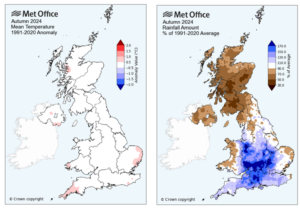
- According to the Met Office, autumn temperatures were generally close to average, but featured cooler spells in September and November
- The weather throughout autumn was unsettled, with low-pressure systems causing significant rain and wind across the country
- October began with above-average temperatures before a mid-month cooldown.
- Storm Ashley arrived at the end of October, bringing heavy rain and strong winds to northwestern parts of the UK
- Mid-November saw a return of wintry conditions, with snowfall in parts of the country before Storm Bert brought heavy rain and gusty winds
- January recorded below-average temperatures, with a provisional mean of 3.0°C—nearly 1°C below the long-term average
- While Scotland and Northern Ireland experienced drier-than-average conditions, southern England saw increased rainfall.
So, what does this all mean for soil mineral nitrogen levels and soil supply?
Soil temperatures during the autumn and winter period have an effect on soil nitrogen dynamics. When weather conditions remain mild, plants keep growing and biological processes and nitrogen cycling continues. Unlike when temperatures are cold, such as this autumn/winter, where soil nitrogen mineralisation rates were likely slowed or be halted in its tracks. This means that, in drier regions where cold snaps occurred, the risk of nitrate leaching would have been minimised or at the very least reduced, leading to more nitrogen remaining in the soil crop system for spring growth.
While the RB209 soil nitrogen supply index system serves as a helpful guide, it cannot completely account for the effects of changing weather on a more local scale. Given the diverse climate conditions across different regions, direct measurement is the only way to accurately assess soil mineral nitrogen levels.
How NRM can help
NRM provides analytical services like N-Check and N-Check Plus to help you understand the nitrogen levels in your soil for the upcoming spring growing season. Early planning is key to maximising crop productivity and minimising input costs. Growing crops with less nitrogen doesn’t have to lead to reduced productivity or only be reserved for every season in ten—quite the opposite.
Contact NRM for more information or discuss how to go about soil nitrogen sampling with your agronomist.
Click here to order kits and learn more about our N-Check services.
References
Climate summaries – Met Office
Save money on fertiliser with N-Check – Cawood
Visit NRM