


How will upcoming legislation protect aquatic ecosystems from harmful halogenated compounds?

Marchwood
Environment
Have you heard of Adsorbable Organic Halides (AOX)? In recent years, these compounds have received a lot of attention due to how toxic they are to both the environment and human health, and because of how widespread they are in our wastewater and soils. In fact, 23 kinds of persistent organic pollutants (POPs) selected by the Stockholm Convention, as well as over half of the pollutants identified as a priority by the US Environmental Protection Agency, are AOX compounds (Xu et al., 2022).
UK legislation will soon be coming into place to help protect aquatic ecosystems from these harmful compounds. Read on to find out more about AOX and where they come from, why it’s important to test and monitor AOX, how AOX are measured, and how Marchwood can help.
What are AOX and where do they come from?
Adsorbable Organic Halides (AOX) is a sum parameter for halogenated organic compounds (HOCs) in water, sewage sludge and soils. These compounds are a large class of natural and synthetic chemicals that contain one or more adsorbable halides (chloride, bromide and iodide, represented by the X in the name), combined with carbon and other elements.
HOCs are a product of industrial processes, particularly bleaching of paper and pulp products. This process generates HOCs through a reaction between wood fibres and the chlorine in bleach products, which are then found in the wastewater/effluent discharges from manufacturing plants.
Why is it important to test and monitor AOX?
Monitoring this group of compounds in wastewater and effluent is paramount to identifying the risk to aquatic life and public health. AOX are toxic and, in some cases, carcinogenic. Their long half-life periods mean that they are highly persistent in the environment and resist degradation, remaining in our soils and waters and causing more harm over an extended period of time. For example, many of these compounds often react with metal ions in soil, increasing soil toxicity and accumulating in the food chain of aquatic organisms—and, therefore, ours.
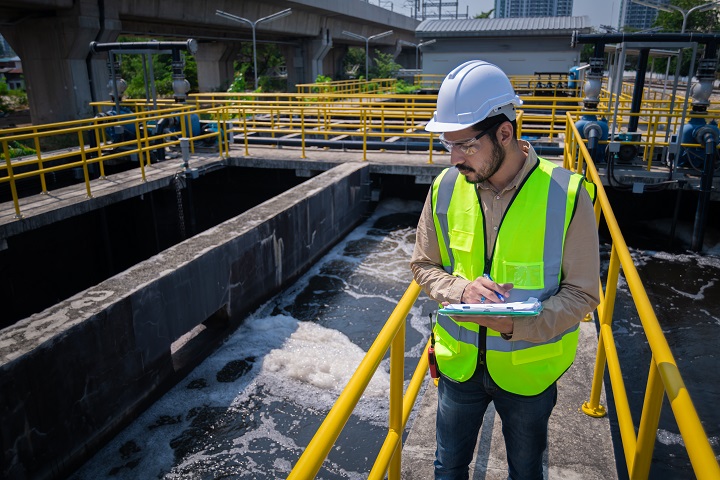
Monitoring AOX is also required for wastewater treatment plants to comply with current and future legislation. The UK Environment Agency has already followed the lead of European authorities by introducing AOX monitoring in wastewater and effluent as a requirement for permits in England. So, currently, many wastewater treatment plants are monitoring AOX on a weekly or monthly basis to maintain compliance with their environmental permits.
It is also expected that this will be rigidly enforced with legislation by summer 2024 for all water and wastewater companies seeking to dispose of their effluent.
So, monitoring AOX is essential not only to ensure sufficient water quality, but also to trace their sources or determine the efficiency and efficacy of AOX removal techniques in water treatment processes. It’s also important so that we can safeguard our environment, particularly aquatic ecosystems. This upcoming legislation will help water treatment companies adhere to AOX level limits, reducing the pollution entering our waters and helping aquatic ecosystems continue to thrive.
How are AOX measured and how can Marchwood help?
Marchwood is UKAS accredited for AOX testing of natural waters and sea waters. Whilst effluent waters currently fall outside of our scope of accreditation, our laboratory team have been validating the method against an effluent matrix for an extension to scope with UKAS. We will be supporting the wastewater industry by offering the required specification of testing by the time new legislation is introduced.
To measure AOX, halogenated compounds are absorbed onto active carbon by shaking it with the liquid sample over a set period. This solution is then passed through activated carbon columns at a set speed, and prompts the chloride, bromide and iodide ions to absorb onto the surface of the carbon. The halogens are released when the activated carbon is combusted in a stream of oxygen, and AOX quantified by micro-coulometric titration.
Our method is based on ISO 9562, the recognised standard for determining AOX in water samples.
For more information, or to book your tests now, please contact us.
References
Xu et al. (2022), The occurrence, distribution and removal of adsorbable organic halogens (AOX) in a typical fine chemical industrial park. Environmental Pollution, Vol. 312: https://www.sciencedirect.com/science/article/abs/pii/S026974912201257X.
Want to be notified whenever we publish a new blog?
Give us your email address and click submit to sign up for notifications once a month.