


ROI agricultural policy update: how IAS is helping farmers meet their obligations

IAS
NRM
Agriculture
Environment
The Republic of Ireland (ROI) is in its first year (2023-2027) of adopting the new measures associated with the overhaul of the Common Agriculture Policy (CAP) and the EU’s new Strategic Plan.
I first wrote about how the ROI was approaching the adoption of the new CAP last autumn: you can read it here if you haven’t already. The ROI government hopes that the environmental and climate challenges agriculture faces in the ROI will be addressed through financially incentivising sustainable farming practices and land management approaches. The ROI CAP Strategic Plan (CSP) therefore has a clear emphasis on achieving a higher level of climate and environment ambition by focusing on improving biodiversity, water quality, carbon sequestration and mitigation.
What must farmers do to claim payments?
If farmers are claiming basic income support sustainability scheme (BISS) payments, then the land must be sustainably managed. To encourage this, several statutory conditions apply. Specified conditionalities apply across the three core areas listed below. These actions replace the cross-compliance actions that featured in previous schemes.
- Climate and the environment
- Public, animal, and plant health
- Animal welfare
These conditions are implemented through Statutory Management Requirements (SMR) and Good Agricultural & Environmental Conditions (GAEC). There are seven GAEC standards, relating to soils and its management, climate mitigation, habitats, and water. Click here to find out more about SMRs and GAECs.
Eco-Scheme
To build on the approach of baseline conditionality requirement payments and to help drive the EU’s environment and climate ambitions, farmers have the option of joining the new ‘Eco-Scheme’. This is designed to maximise farmer engagement and achieve climatic and environmental improvements across all farmed land.
There are eight agricultural practices to choose from. Of the eight, three include enhanced options. Farmers will have to undertake at least two standard practices or just one enhanced option to qualify. Click here to review all of the options.
Agri-Climate Rural Environment Scheme (ACRES)
One of the biggest schemes launched under the CSP is the Agri-Climate Rural Environment Scheme (ACRES), which is worth 1.5 billion euros.
ACRES proposes to deliver significant long-term environmental improvement through mass farmer participation, engagement, and collaboration. It also relies on individual farmer commitment to implement extensive environmental improvement across their own farms. In Tranche 1, over 46,600 farmers applied to be part of this scheme. Tranche 2 is opening soon in October 2023, so apply now to see how you can benefit.
National Fertiliser Database and the Nitrates Directive
The ROI has recently implemented a new national fertiliser database to track fertiliser sales and highlight where fertiliser is being bought and applied. Anyone buying or selling fertiliser must be registered, opening farm stocks, and all sales and movements have to be submitted to the Department of Agriculture, Food and Marine (DAFM). This approach to monitoring fertiliser sales is meant to encourage the better and safer use of fertiliser, improve nutrient use efficiency, and reduce the reliance on fertiliser in line with the Climate Action Plan.
The Nitrates Directive relates to water quality and how to improve it within the ROI. Part of these regulations restricts the use of organic nitrogen on farm to help improve and protect water quality. However, the EU has recently concluded that water quality in the ROI has not improved significantly enough since the directive was introduced. If significant water quality improvements are not made between now and 2026, there is a risk that the farm loading derogation limit will be reduced from 250 to 220kg N/ha.
This change presents practical issues for intensive dairy farms. Many would need to either reduce their animal numbers, find more land, or export surplus livestock manures to other farms. Measuring the nutrient content of livestock manures is the best way of pinpointing how much organic nitrogen they contain. This means farmers can apply manures at rates that don’t exceed the nitrogen loading limits enforced in the nitrates regulations and optimise grass and crop growth.
Liming Programme 2023
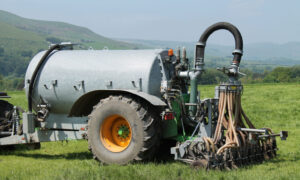
Outside of the CSP, DAFM introduced a liming programme earlier this year. This scheme incentivised the use of lime to correct soil acidity and therefore improve aspects of soil functionality, such as increased nutrient availability and overall soil health.
The liming programme was quickly oversubscribed with 41,000 applications received by the end of April 2023. However, the minister recently announced an 10% increase in the funding allocated to it, resulting in 16 million euros for the scheme in total. The budget increase will facilitate approval for up to 40 tonnes of lime per eligible applicant. All eligible applicants will receive a letter of approval from the department confirming their eligible tonnage of lime.
Valid soil sample results must be available to demonstrate the need to correct soil pH (maximum of 4 years old from date of purchasing the lime), and analysis reports must be made available if required for compliance checks. Click here for the T&Cs of the liming programme.
Regularly testing soils for pH and their nutrient content is the best way to safeguard productivity and minimise nutrient excesses in the environment. The most cost-effective approach is to measure 25% of the farm every year, so no result is more than four years old.
How IAS can help
IAS, and sister company NRM, are part of the Cawood Group. As an approved DAFM laboratory, IAS offers a full range of analytical options that can help farmers in the ROI meet their analysis obligations as defined in the new CSP schemes and the liming programme for NVZ compliance and nutrient management. Click here to see the approved DAFM list.
Analysis is recognised as being the foundation of sustainable practices. By identifying a start point and testing regularly, analysis is used as a measurement of progression as new farming techniques are adopted on the sustainable farming journey. IAS is a fully accredited laboratory with 30 years of experience in the measurement of agricultural soil health, forage quality, milk, minerals, and water quality. IAS has a long track record of delivering successful long term environmental & agricultural testing, monitoring, and sampling projects around Ireland.
To get in touch with the experts at IAS and for more information, click here.
Resources
Agricultural Soil Testing & Sampling | IAS Laboratories (iaslabs.ie)
https://www.gov.ie/en/service/f5a48-agri-climate-rural-environment-scheme-acres/
https://www.gov.ie/en/collection/98355-national-fertiliser-database/
National Liming Programme 2023.
Visit NRM