NRM has launched an innovative online course developed in partnership with BASIS. This BASIS Classroom course, entitled ‘Laboratory Analysis 1: Soil Nutrients’ and written by NRM’s expert agronomists, is the first in a two-part series designed to provide agricultural advisors with a comprehensive understanding of soil analysis.
‘Soil analysis plays a vital role in agriculture, land management, and environmental monitoring,’ said Dr Sajjad Awan, Soil & Crop Nutrition Agronomist at NRM and co-author of the course. ‘It offers critical insights that inform fertilisation strategies, crop production, and sustainable land use. The programme is structured to guide participants through key aspects of soil nutrient analysis. The course explores sample quality and the importance of precise sampling for accurate and reliable results, then moves on to explaining units of measurement and the interpretation of laboratory nutrient results. The final section describes the laboratory process itself, from sample preparation to reporting results, offering a behind-the-scenes look at how nutrients are measured.’
‘Understanding soil nutrients is fundamental to making informed decisions to better manage crops and soils. This course provides a solid foundation for those seeking to enhance their expertise in laboratory analysis interpretation,’ continued Dr Awan. This first instalment lays the groundwork for more advanced learning opportunities and supplies agronomists and advisors with the knowledge and tools necessary to interpret soil nutrient data more confidently—whilst earning two Continuing Professional Development (CPD) points towards their BASIS qualification.’
“Laboratory Analysis 1: Soil Nutrients” is available exclusively for BASIS members as part of BASIS Classroom, and will be available for 12 months. Participants who complete the 30 minute course will earn two CPD points, enhancing their expertise and helping maintain professional credentials. Part two of the course will be available soon, which will focus on soil carbon and organic matter analysis.
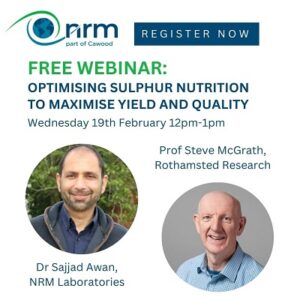
Agronomists, growers, and other agricultural industry professionals are invited to a critical webinar on Wednesday 19th February titled “Optimising sulphur nutrition to maximise yield and quality”. Participants will receive 1 BASIS point for attending and learning more about optimising sulphur nutrition if they are BASIS members.
19th February 2025 at 12pm-1pm GMT
Register here now to secure your space.
Sulphur is often overlooked in agriculture. Now, it’s becoming recognised as an essential nutrient—just as important as nitrogen—required for nitrogen uptake, improved crop quality, and boosted yields. Despite this, winter wheat tissue and grain analysis from the past few years have shown that a significant proportion of samples were deficient in sulphur. Why? And how can we make impactful changes for optimal crop production using key data insights?
Hosted by experts from NRM, the UK’s leading agricultural analysis laboratory, and Rothamsted Research, a renowned agricultural science research centre, this free virtual event focuses on the importance of sulphur in boosting crop production and for effective nutrient management, as well as a deep dive into the latest data insights.
With perspectives from agronomists and discovery leaders, this webinar is essential viewing for anyone in agriculture, from farmers to advisors to change makers.
“This webinar will bring together leading experts to help farmers understand how neglecting nutrients like sulphur can adversely impact nutrient availability and plant health,’ said Sophie Cath, Senior Business Development Manager at NRM. ‘With last year’s extreme wet conditions and ongoing weather challenges across the UK, sulphur deficiencies—particularly in cereal and oilseed crops—are becoming a growing concern. Farmers must reassess their nutrient management strategies with this vital nutrient to make sure their crops are getting all they need to thrive.’
Sophie will be joined by a panel of agricultural experts, including:
- Professor Steve McGrath, Discovery Leader at Rothamsted Research
- Dr Sajjad Awan, Soil & Crop Nutrition Agronomist at NRM
- Alli Arden, Agronomy Manager at NRM
Participants will have the opportunity to engage with our speakers, gaining practical insights and innovative strategies for optimising sulphur nutrition. A live Q&A session will also give attendees the opportunity to question our experts.
Event details:
Title: Optimising sulphur nutrition to maximise yield and quality
Date: Wednesday 19th February
Time: 12pm-1pm GMT
Platform: Microsoft Teams
BASIS points: 1
Registration: https://events.teams.microsoft.com/event/9b1771bf-062f-4444-83b7-f8fef1b9ab3f@c62ca484-12b2-491a-87a0-20aa679424ce
Our webinar is open to anyone interested in sulphur nutrition and agricultural data insights. Early registration is encouraged to reserve your space.
For the first time, IAS Laboratories has published an annual soil summary report for 2023-2024, compiling data from thousands of soil samples across Ireland. The data reveals that there are significant nutrient imbalances across two thirds of Irish soils.
IAS Laboratories specialises in agricultural and environmental testing, with 30 years’ expertise in agricultural soil testing and silage analysis. The business’ inaugural soil summary is compiled from 45,000 soil samples collected across Ireland between June 2023 and May 2024. This data helps farmers and their advisors understand current nutrient status across Ireland, compare results across farms, implement insightful management strategies, and enhance soil health for optimal crop production.
‘The soil data that we analysed last season shows that there are some serious nutrient deficiencies in most Irish soils,’ said Dr Sajjad Awan, Agronomy Manager at NRM, IAS Laboratories’ sister company. ‘Over 30 years, we’ve seen similar deficiencies in the UK at NRM, prompting us to launch a soil summary for IAS to see how soils are faring in Ireland and to help farmers decide what to do with that information.
‘The findings are a wake-up call. It’s concerning that imbalances seem to be the norm, and whilst weather conditions do have an impact on nutrient availability and crop yields, it’s important to learn from the data to work towards overall improvement.’
Key findings from the summary include:
- Soil pH: although the average soil pH was 6.4, which is close to the ideal range for crop growth, 37% of samples fell below pH 6.0. Low soil pH reduces the availability of key nutrients, which has an impact on the efficient use of applied fertilisers. It also increases the availability of aluminium and manganese, which can reach toxic levels and harm plant roots, reducing their ability to absorb water and nutrients.
- Soil phosphorus: 63% of soils were deficient in phosphorus, which can limit crop yields, and 15% had too much phosphorus, which poses potential environmental risks through leaching.
To help optimise soil nutrient levels, Dr Awan recommends testing more regularly. This will give growers and advisors the data they need to start making informed, insightful changes into their management programmes and improve crop production.
‘Testing is the only way to get the information required to start taking steps towards evening out these issues and imbalances,’ said Dr Awan. ‘However, many farmers either don’t test frequently enough or failing to act on their results. Regular soil testing is so beneficial, as it provides crucial insights into the nutrient status of the soil. This helps farmers and land managers make informed decisions about fertilisation and soil amendments for optimal farm productivity. Consistent testing also allows farmers to track progress year after year, leading to measurable improvements in both productivity and profitability over time. We recommend testing all fields once every four years, or rotating through a quarter of fields annually.’
IAS Laboratories’ standard soil package provides an analysis of plant-available phosphorus, potassium, magnesium, and soil pH. Additional tests, including analysis of soil organic matter, soil carbon, and plant tissue testing throughout the year provide farmers with a comprehensive understanding of their soil health for more informed decisions each season.
‘Supporting sustainable food production and a fostering safer, healthier planet are core priorities for us as a business,’ said Laura Kavanagh, Assistant Laboratory Manager at IAS. ‘We are pleased to launch our brand new soil summary to give Irish farmers the nationwide data and insights that they have never had before. This resource can be used to help them make informed decisions to improve both their individual farms and contribute to the overall health of Irish soils.’
View the first part of the soil summary here.